Flickering, dim lights, hard starting, engine stalling and so on, 6 signs of your bad alternator you should watch out.

Starter Solenoid Quality Control: What to Check Before a Bulk Order
A starter solenoid that passes a bench test can still fail under real starting conditions. What matters for bulk orders is confirmed specifications, tests under load, samples from production tooling, and batch traceability that can contain a defect.

Meet Sintly at INA PAACE Automechanika Mexico 2026
The biggest automotive aftermarket event in Latin America is back, and Sintly is heading to Mexico City. From July 8-10, our team will be at Booth 1120-1 at Centro Banamex, ready to talk starter solenoids, relays, and aftermarket parts. If you are visitin

Plastic vs. Aluminum Oil Filter Housings: Key Differences
Plastic and aluminum oil filter housings both fail when production control is wrong. Choose by return data, not perception alone: confirm material grade, critical dimensions, leak-test method, heat-cycle validation and batch traceability before ordering.
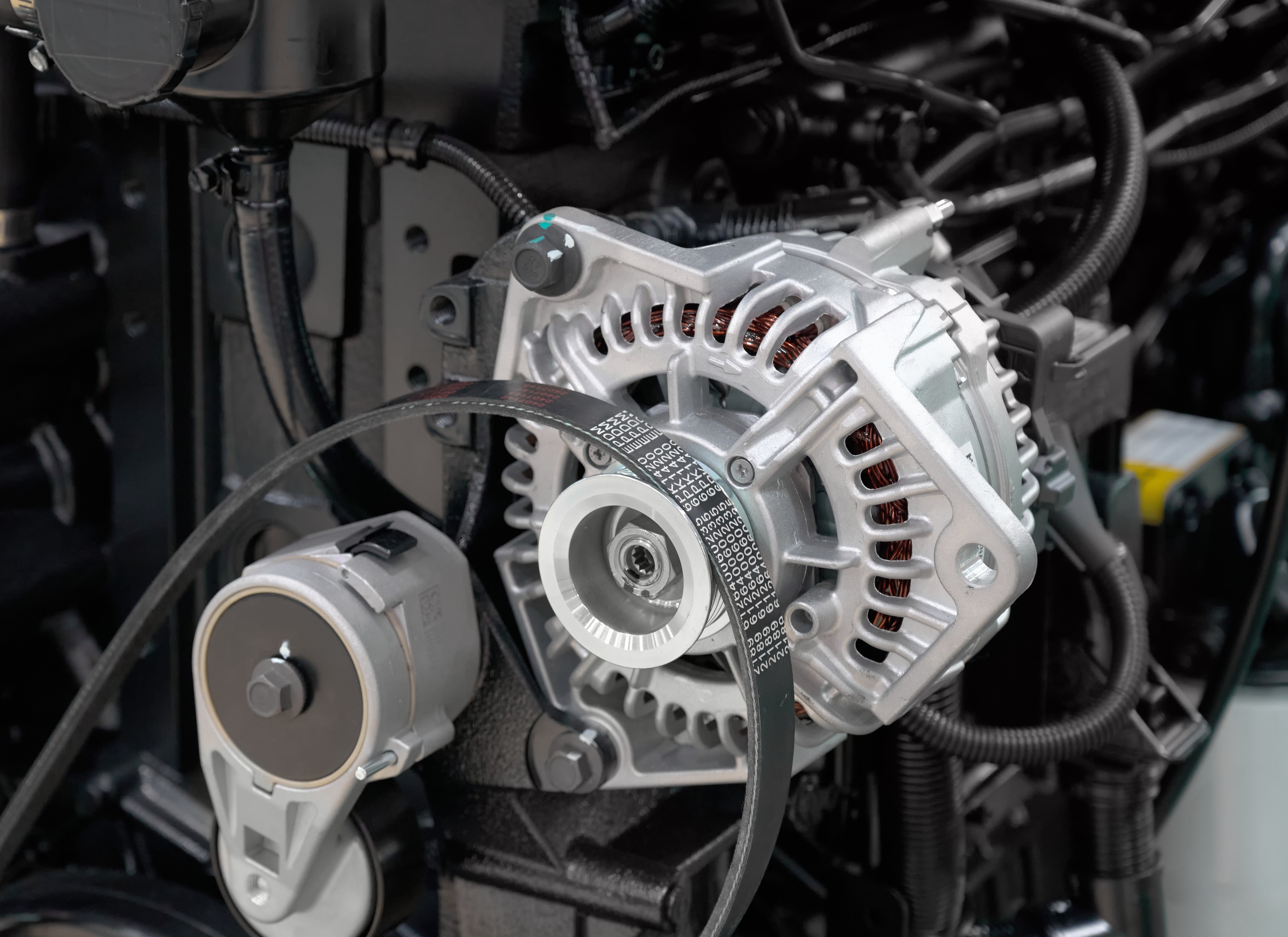
The automotive alternator is the “charger” for your car’s battery and electrical system. It consists of key parts such as the pulley, stator, rotor, voltage regulator, and rectifier. Its working principle is that the pulley drives the rotor, which generates alternating current (AC) within the stator. But since the battery can only accept direct current (DC), the rectifier converts the AC to DC. Then, the voltage regulator monitors to keep the voltage at a safe, consistent level.
As a vital component in a vehicle, it’s especially important to ensure the alternator is functioning properly.
(figure 1 alternator key components)
If most of your electrical components respond slowly or stop working, like windows moving sluggishly, the headlights flickering unexpectedly, it could be a symptom that your automotive alternator is under performance. What’s more concerning is the safety risk that comes with a failing alternator-it stops charging and the engine shuts off, leaving your vehicle stranded on the road. That’s why you should pay attention to warning signs and check your alternator in time.
How do you judge the condition of an alternator without multimeter?
Once the engine is running, the alternator powers most of the vehicle’s electrical systems—including the headlights. Under normal conditions, headlights respond properly and maintain steady brightness. But if the alternator fails and voltage drops too low, the lights may appear dim. If the voltage is unstable, the lights may flicker uncontrollably.
The engine relies on the battery to start, and the battery depends on the alternator to stay charged once the car is running. If the alternator is going out, two things may happen:
First, the dead alternator can’t recharge the battery, and once the battery drains completely, the engine won’t start again.
Second, you may notice the engine takes several tries to start. Even if it does start, it may stall later due to insufficient power from both the battery and the alternator.
In the first case, it’s also important to rule out problems with the battery itself.
How to Determine Whether the Issue is the Battery or the Alternator?
Once the car jumpstarts, the alternator takes over as the primary power source, while the battery’s role becomes secondary. To test, use jumper cables to connect to another car and start the vehicle. Then, disconnect the jumper cables immediately and observe whether the car stalls:
If the car keeps running, the problem is with the battery. The alternator functions properly.
If the car stalls suddenly or the voltage drops, it means the alternator doesn’t supply power, and the car relied on another vehicle’s battery before the jumper cables were removed. Our alternator has failed.
As the alternator closely connects with the battery, you should first check the battery’s condition when the battery warning light on the dashboard comes on. However, a faulty alternator is the more common cause. Even if the alternator’s voltage is unstable, the battery warning light may flicker on and off with the voltage changes. It is an obvious sign that the alternator’s failure is causing the battery warning light to activate.
Your car seems to have several issues, such as the windows not responding, the central screen dimming, and the air conditioning being less effective than usual. Additionally, the wipers may malfunction or run slowly - these could all be signs that you need to check your alternator for power supply issues as it should provide a steady voltage after the engine starts. Moreover, some vehicle electrical systems prioritize certain accessories. When power is low, the system may temporarily disable non-essential devices to ensure that critical ones continue to function.
A strong, pungent odor is a warning sign that components inside the car due to be overhead, are damaged. It emits a sharp smell that the rubber belt is burnt as the alternator near the engine.
Similarly, if the alternator is under heavy load or its internal circuitry fails, the wires may be overheated, eventually causing the burnt insulation to release an irritating odor. You should check the alternator promptly.
If the issues mentioned above are hard for you to notice, you can still assess your alternator through sound, especially the car accelerating. The motion connecting the alternator and the engine is driven by the pulleys and the crankshaft pulley. Even when the engine idles, the alternator continues to operate properly, as the pulley rotates about three times faster than the crankshaft pulley. You may hear noticeable whining or screeching noise when the pulley appear in trouble, like the high-speed rotating pulley detaches from the belt, the pulley and shaft become misaligned, or if the bushings or bearings wear out.
When you turn on more devices and consume more power, the alternator has to overwork. In this case, these components inside the alternator often overheat, affecting the alternator's lifespan significantly.
If you hear the unusual noises and notice the belt slipping, the likely cause is the severe friction that happens between the belt and the pulley. By regularly inspecting whether the belt has cracks or not, you can replace it in time, ensuring more stable performance.
Some drivers may ignore checking the belt's proper specification or correct installation. The belt is so tight that it damages the bearing and accelerates its own wear. Eventually, the constant tension breaks the belt completely.
Alternator engineers design a good seal to prevent corrosion from water and salt. If not, the issue occurs due to the broken seal and short circuits..
These fluids are typically corrosive, which can damage the alternator housing. Additionally, the fluid onto the alternator is prone to attracting the dust and restricting the heat dissipation, adversely affecting the alternator efficiency.
Understanding the average alternator lifespan is generally 5 - 7 years. It’s necessary for you to replace the brand new alternator at the end of its service life, ensuring driving safety. However, its performance can be extended with your regular check and maintenance.
With the above causes and signs, you can focus on where you should protect and maintain to extend the alternator's lifespan. But once you notice these signs, should you replace the alternator immediately?
The answer is: "You should contact a professional for a bench test and repair as soon as possible." The alternator, acting as the car driving’s "charging station," plays a crucial role in the operation of other connected components. When it goes out, you perhaps spend $200 on a new one. If you need a full replacement, you need to buy parts like diodes or voltage regulators. And its wear and tear can lead to more issues, potentially damaging the engine and causing even greater loss. Therefore, contact us or another professional promptly to prevent further costs.
The article above has outlined the 6 common signs of alternator failure. As the alternator and battery are closely linked components, what are the signs that the battery itself is failing?
Smell: A damaged battery may emit a strong odor of rotten eggs or sulfur, which could indicate leakage.
Sound: You might hear a "clicking" noise or a "rurr" sound, when attempting to start the engine
Appearance: A failing battery may show signs of swelling or bulging.
Yes, a dead alternator can cause the car to shake. The inconsistent power supplied to the engine and other electrical components can lead to shaking.
Yes, a car can have multiple alternators. When additional high-power electrical devices are added to your vehicle, you may require an extra alternator to provide sufficient power to the electrical system.
You don’t have to worry about the car suddenly stopping in the middle of the road. If the alternator goes out, the vehicle continues to run on the battery’s energy until it’s depleted. During the process, the electrical system has insufficient power, and eventually shuts down once the battery runs out.
Yes. You should check your alternator regularly and as you notice the unusual signs, replace it in time.
Electric Vehicles don’t have alternators.
Yes, it can be used as a temporary solution to start the car. However, since a faulty alternator can’t charge the battery, your car might stop while driving. Additionally, the malfunctioning alternator causes errors in other systems. It's crucial to replace the alternator as soon as you notice any issues.

Alternator
What parts influence the quality and lifespan of an alternator? Before you buy car alternators, learn about the parts of an alternator and their functions in depth and then choose the right alternator.

Alternator
Replacing an alternator is relatively easy and do it yourself