
Battery relays in heavy-duty use fail more from misread ratings than bad manufacturing. This article covers duty ratings, temperature derating, cycle life, smart alternator compatibility and sourcing checks for wholesale buyers.
Battery relays in heavy-duty use fail more from misread ratings than bad manufacturing. This article covers duty ratings, temperature derating, cycle life, smart alternator compatibility and sourcing checks for wholesale buyers.
In dual battery systems, commercial fleets and construction machinery, the battery relay is one of the smallest components on the invoice and one of the most expensive to get wrong. A relay that welds shut on an excavator can flatten a starting battery overnight and idle the machine the next morning. For a distributor, that same failure becomes a warranty claim, a return shipment and a customer who quietly moves to another supplier.
Many such failures trace back to selection rather than manufacturing. The relay was asked to carry current it was never rated to carry continuously, or it was placed in an environment the datasheet never promised it could survive. The specs were on paper, but they were read the wrong way.
Before getting into ratings, it helps to scope the term. Battery relay is a broad label covering several related but distinct products. In this article it refers mainly to relays used for battery isolation, auxiliary battery control and high-current power distribution. Voltage-sensing relays and battery disconnect relays work on the same electromagnetic switching principle, but their control logic and the criteria that matter for selection are not directly interchangeable. The guidance below should be read against the specific product category being sourced.
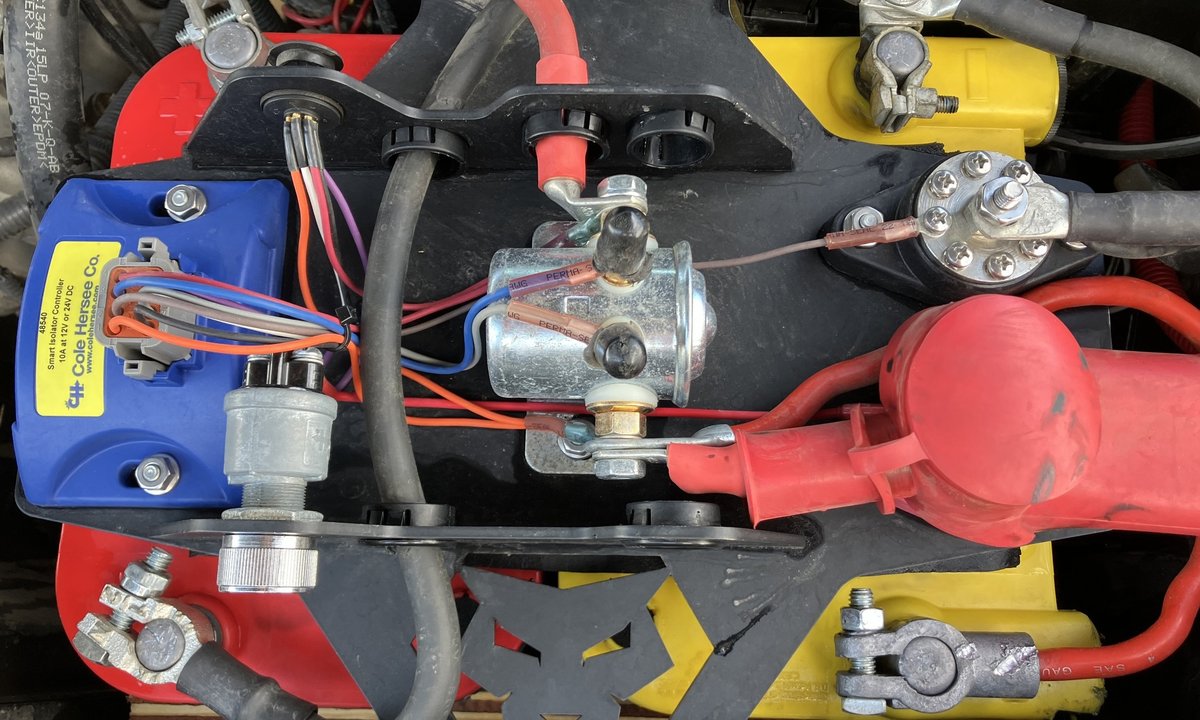
Ask a technician to pull a failed battery relay from a service truck, and there is a good chance the part was never meant for the job in the first place.
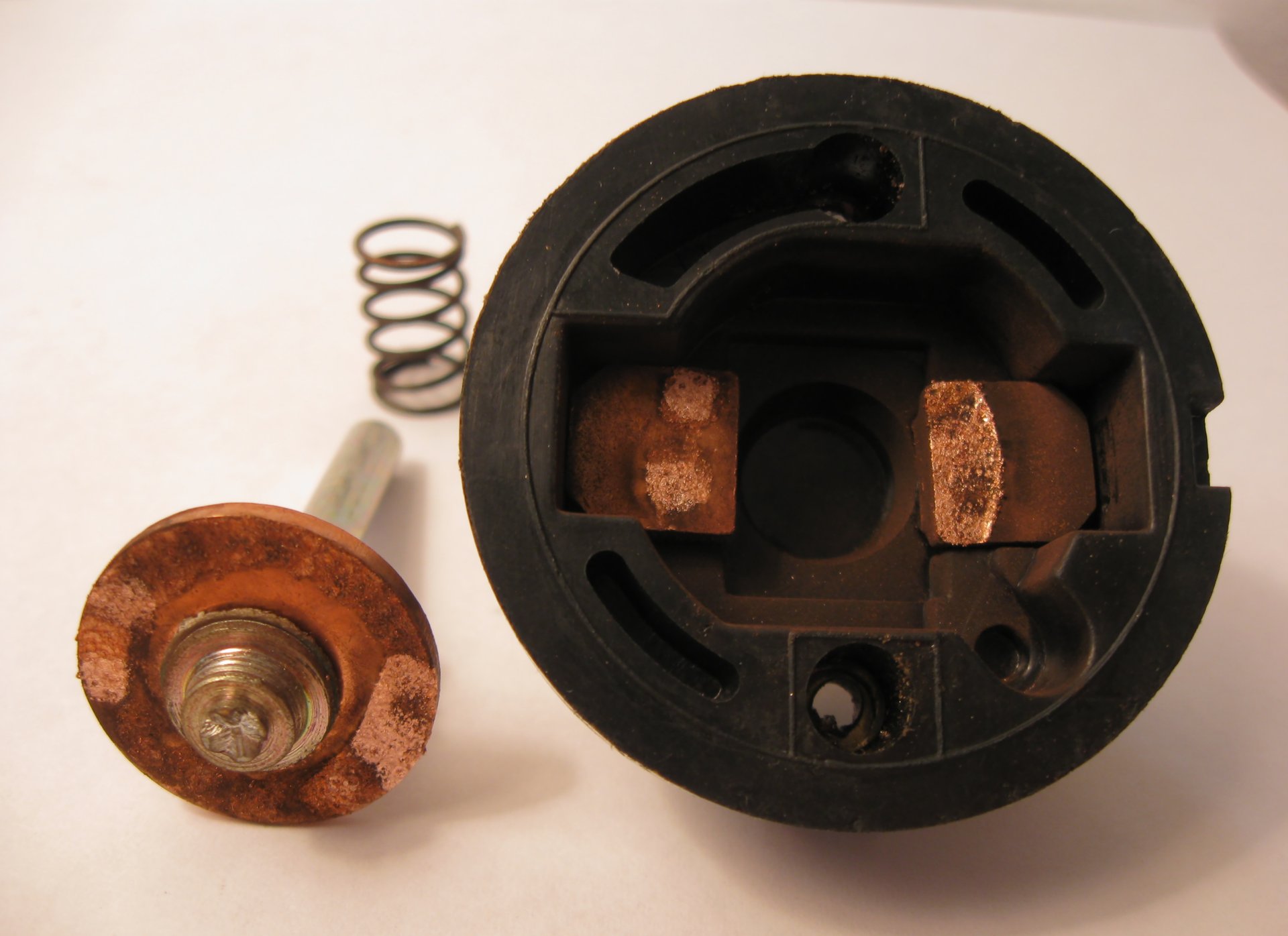
The most common mistake is using a starter solenoid where a continuous-duty relay belongs. A starter solenoid is built to deliver a high burst of current for a few seconds and then release. Its coil is not designed to stay energized for long periods, and in a battery isolation circuit that holds it closed for hours the coil can overheat and fail early. The part may pass a bench check and an initial installation test, then fail later under sustained duty.
The second mistake is treating peak current as the rating that matters. A relay listed at 200A sometimes means 200A for a few seconds, not 200A all afternoon. Buyers comparing two part numbers side by side see the same number and assume the same capability, while the underlying datasheets often describe two different parts.
The third mistake is quieter. The relay was selected against its rating at room temperature, then installed in an engine compartment where room temperature does not exist. That one is covered below.
A continuous-duty relay carries its rated current indefinitely, which requires both a coil rated for constant energization and contacts that can shed heat at that load. An intermittent-duty part handles high current in short bursts with a recovery period between them. The distinction is not a marketing label. It reflects real differences in coil wire gauge, contact geometry and housing design.
Relay datasheets normally derate current capacity as ambient temperature rises, and the relay's own heat rise adds on top of that ambient. The actual reduction depends on contact design, housing, mounting position and airflow, so it cannot be read off a universal curve.
In practice this means a relay selected against its nameplate rating at room temperature may carry materially less current once installed in a hot engine bay or machinery compartment. The only reliable figure is the derating curve for the exact part number, applied against the expected operating temperature.
A headline current rating without its test temperature is incomplete, and the same applies to a supplier quote that gives a current figure without specifying the ambient condition it was measured at.
The current a relay can carry is not the current it can switch. Closing onto a capacitive or motor load means accepting an inrush several times the steady-state value, and breaking current is what erodes contacts through arcing. Datasheets state make and break ratings separately for this reason. A dual battery system feeding inverters or winches needs headroom on the make rating, not just the carry rating.
For a full breakdown of battery relay types and their specification formats, see What is the Battery Relay.
Cycle life is the specification least discussed and most consequential for fleet economics.
Industry validation data gives a useful reference point. Quality automotive relays are typically tested to around 100,000 switching cycles at full rated load under resistive bench conditions, while mechanical endurance runs to a million operations or more when switching little or no current. Switching at rated load erodes contacts through arcing every cycle. Switching light load barely touches them.
Real-world life therefore depends on how the relay is used far more than any single number on the box. A relay closing onto a high inverter load a dozen times a day is consuming its electrical life quickly. The same relay switching a light auxiliary circuit could run for years. High ambient temperature accelerates wear by affecting contact pressure and oxidation behavior.
For B2B buyers the useful shift is from unit price to cost per service interval. A relay that costs more but is validated for the actual load profile is often cheaper than processing one field failure, once warranty handling, shipping and technician time are counted.
On vehicles with a conventional alternator, standard relay logic holds up well. The alternator charges at a stable voltage whenever the engine runs, the relay closes on a voltage threshold or an ignition signal, and the installation behaves predictably.
Smart alternators complicate that picture. Their behavior varies by vehicle and control strategy, and the charging profile is no longer a steady voltage. Many systems reduce alternator load during cruising or acceleration, and some systems raise charging during deceleration rather than cutting it. The result is that system voltage can fall below the engagement threshold a conventional voltage-sensing relay was designed to expect, which can cause incorrect disengagement, repeated switching, or failure to charge the auxiliary battery correctly.
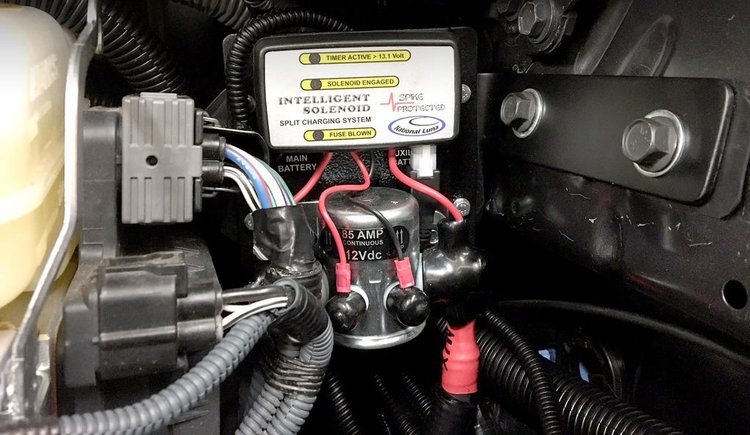
When specifying relays for vehicles in this category, it is worth confirming with the supplier whether the engage and disengage thresholds are adjustable, whether the unit includes a time delay so brief voltage dips do not trigger switching, and how it responds to start-stop cycling. Understanding alternator operation helps when evaluating thresholds against specific vehicle platforms.
Fleet buyers do not need every SKU in the catalog to be smart-charging compatible. Knowing which ones are, and labeling them accordingly, prevents the case where a customer installs the wrong relay on a late-model vehicle and blames the product.
Heavy-duty environments punish relays in ways passenger car specifications rarely address.
Sealing comes first. Construction machinery, marine applications and anything exposed to pressure washing or road salt needs a sealed housing, not a dust cover. Water ingress corrodes contacts quietly, and the resulting resistance rise usually shows up as heat before it shows up as a fault code.
Vibration risk depends on engine and equipment vibration, mounting position, terrain and operating conditions, relay retention and terminal design, and the vibration test standard the part was validated against. Relays with marginal armature retention can chatter under shake, arcing their contacts with each cycle. Suppliers serving the construction machinery segment should be able to reference the vibration standard their parts are tested to.
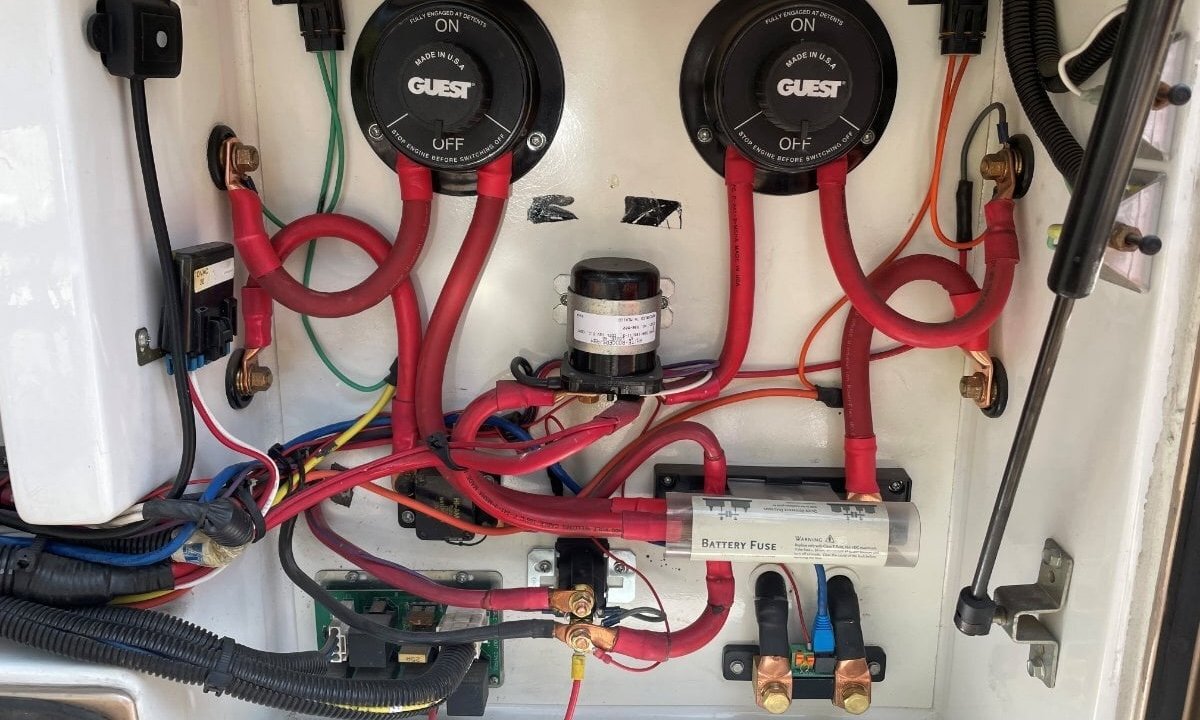
Positive-side and negative-side isolation are not interchangeable design choices. The correct side depends on grounding architecture, equipment design and the maintenance procedures the end user follows, and opening the negative side does not automatically mean every positive conductor is de-energized. Buyers should follow the equipment manufacturer's circuit design rather than assume one cut type is always safer.
|
Parameter |
What to confirm |
|
System voltage |
Matches the vehicle's nominal voltage; coil voltage is not interchangeable across 12V and 24V systems |
|
Duty type |
Continuous-duty for sustained load, intermittent-duty for short bursts only |
|
Load type |
Resistive, capacitive, inductive or motor, since it affects inrush and arcing |
|
Continuous current |
The carry rating at the expected operating temperature, not the headline figure |
|
Make, break and inrush current |
Switching ratings separate from the carry rating, sized for the load's inrush |
|
Ambient temperature |
The expected compartment temperature and the relay's derating curve at that temperature |
|
Sealing and vibration |
Sealing class and vibration test standard matched to the operating environment |
|
Control method |
Voltage-sensing, ignition-triggered or signal-controlled, matched to the charging system |
|
Terminal layout and mounting |
Orientation and footprint that fit the installation and service access |
|
Positive-cut or negative-cut configuration |
Follows the equipment manufacturer's circuit design |
The difference between two relays with identical ratings is everything the rating does not capture.
A useful starting point is to distinguish quality-system certification from product validation. ISO 9001 and IATF 16949 are quality-management-system certifications that describe how a supplier controls its processes. They do not, by themselves, validate any specific relay model. Derating, cycle life, vibration, sealing and electrical endurance each require their own test reports or validation records for the exact part number being sourced.
With that distinction in place, several questions help separate reliable suppliers from the rest. Can the supplier provide product test reports against recognized standards for the specific model? Will they share the derating curve and cycle life validation data behind the headline ratings? How do they control batch consistency, in terms of contact material and coil resistance between production runs? What is the realistic sample validation process before volume commitment? And what customization is available on coil voltage, layout and sealing, at what order quantities?
Sample validation deserves more attention than it usually gets. Bench testing incoming samples against the actual load profile, rather than a continuity check alone, can catch many field-failure risks before volume commitment. A supplier that resists this process may simply lack the data, which is itself useful information.
For distributors building a battery relay category, it is worth cross-referencing how these criteria overlap with adjacent products like starter relays. Customers frequently source both together, and consistent quality standards across the line protect the distributor's brand more than any single SKU.
Why do battery relays with identical current ratings differ so much in price?
The rating is one line of the specification. Contact material grade, coil quality, sealing method, validation depth and batch-consistency controls all vary between manufacturers and all affect cost. Two relays matching on paper can differ in real-world endurance.
Can one battery relay model cover an entire mixed fleet?
Usually not without compromise. A fleet spanning light commercial vehicles, heavy trucks and machinery covers different voltage systems, vibration profiles and duty cycles. Most distributors settle on two or three SKUs positioned by application segment rather than one part for everything.
Are 12V and 24V relay versions interchangeable if the current rating matches?
No. The coil is wound for its rated voltage, and a 12V coil on a 24V supply will burn out quickly. Always match the coil voltage to the vehicle system and verify it on the part marking, not the box.
What affects the MOQ for customized battery relays?
The minimum order quantity depends on the scope of the change. Adjustments to terminal layout, marking or packaging usually carry lower minimums, while changes that require new tooling for the housing, coil or contact assembly push minimums up. Tooling ownership terms and whether the part is shared across other customers also affect the figure, so the MOQ should be confirmed case by case with the supplier.
Can a continuous-duty relay be used as a starter relay?
Not as a direct substitution. A continuous-duty relay and a starter relay differ in coil design, contact capacity and the duty cycle they are built for. Whether a continuous-duty part can handle cranking depends on its make, break and cranking ratings for the specific starter load, and those are separate from its continuous-current figure. Use the ratings for the actual switching event rather than assuming a continuous-current rating also covers cranking.
Do battery relays need periodic replacement as a wear item?
Not on a fixed schedule. Replacement should be based on condition, checked through contact resistance, temperature rise under load, terminal condition and switching performance. A relay switched well inside its ratings may need no attention for a long service life, while one in high-cycle or high-load duty should be inspected during routine maintenance and replaced when the measured parameters move outside the supplier's limits.

Battery Relay
Battery disconnect relays isolate a vehicle or machine battery electrically instead of manually. This article compares monostable and latching control types, load sizing, fail-safe logic and application matching for wholesale and fleet buyers.
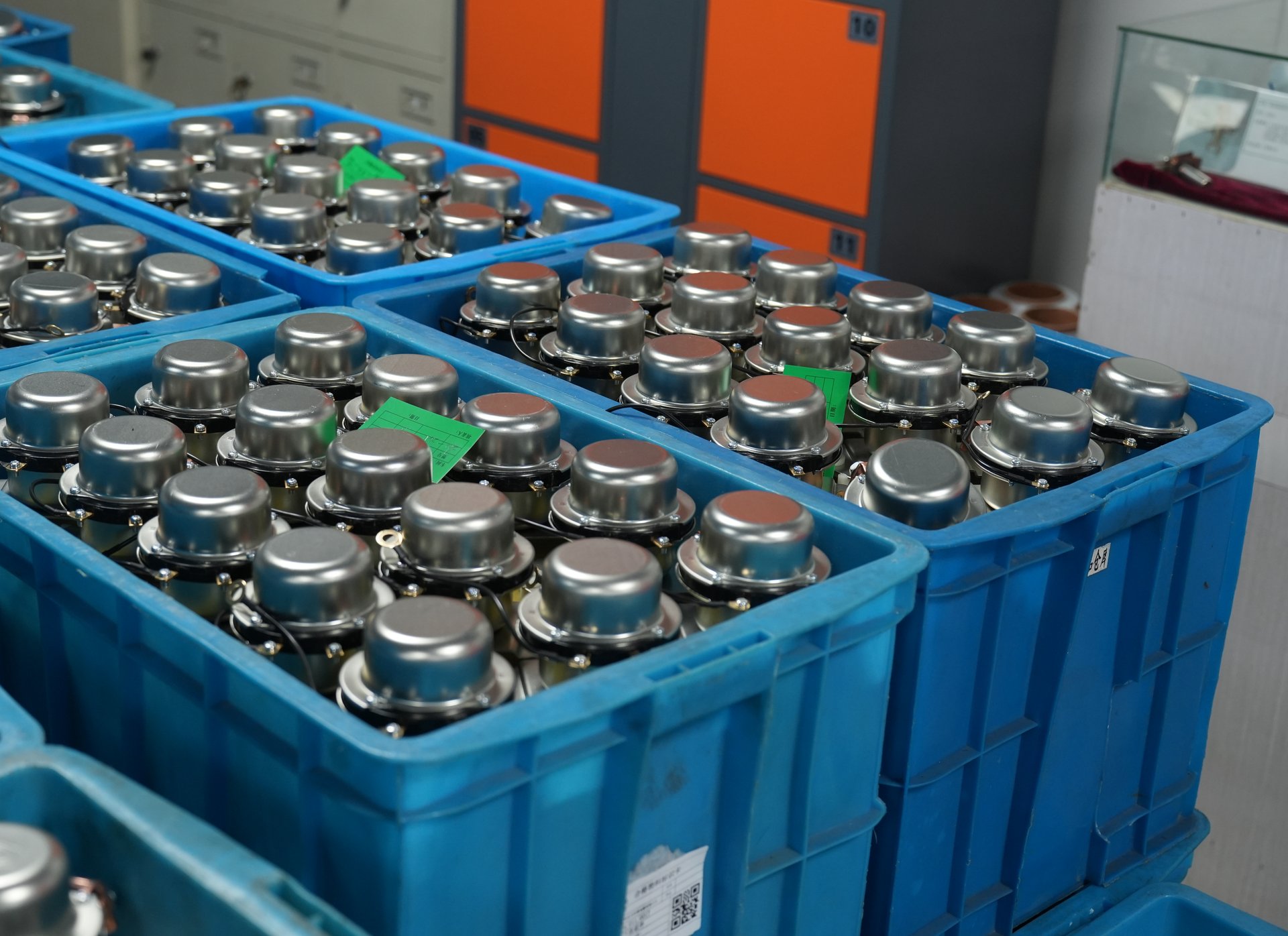
Battery Relay
You can get the knowledge of the battery relay in this article.
Battery Relay
Battery disconnect relays isolate a vehicle or machine battery electrically instead of manually. This article compares monostable and latching control types, load sizing, fail-safe logic and application matching for wholesale and fleet buyers.
Battery Relay
You can get the knowledge of the battery relay in this article.