

Starter solenoid failures follow recognizable patterns. This guide separates failure modes from operating causes, from contact erosion and coil burnout to low-voltage chatter and corrosion, and shows buyers how to read the evidence in returns.
Starter solenoid failures follow recognizable patterns. This guide separates failure modes from operating causes, from contact erosion and coil burnout to low-voltage chatter and corrosion, and shows buyers how to read the evidence in returns.
A starter solenoid is a small part with a violent job. Each time a driver turns the key, it slams a contact disc closed against terminals carrying several hundred amperes, holds that connection while the motor cranks, then breaks the circuit a few seconds later. Done twice a day for years, that is thousands of high-current switching cycles inside a housing not much bigger than a matchbox.
When a solenoid does give out, the failure is rarely random. It lands on one of a handful of well-understood paths, and which path it takes says a lot about how the part was made and how it was used. For buyers sourcing these components in volume, reading those paths turns a box of returned parts into evidence.
Three surfaces inside a solenoid do nearly all the aging. The contact disc and its terminals carry the full cranking current and take an electrical beating every cycle. The coil windings generate the magnetic pull and can only tolerate heat for short bursts. The plunger and return spring handle the mechanical side, engaging the drive gear and pulling everything back after start.
Which of the three gives out first is not luck. One thing worth stating before the details, though. The six patterns below mix actual failure modes, such as eroded contacts or a burned coil, with operating conditions that cause or accelerate them, such as low voltage or a mismatched application. Several can be present in the same failed unit at once, so treat them as things to look for, not a menu of six exclusive faults.
Every time the solenoid opens, the collapsing magnetic field of the motor circuit draws a brief arc across the contact disc before the current stops. The arc is short-lived, but it takes a microscopic bite out of the contact surface each time. Over thousands of starts the disc and terminal faces pit, blacken, and roughen until the contact area that actually touches shrinks to a fraction of what it was.
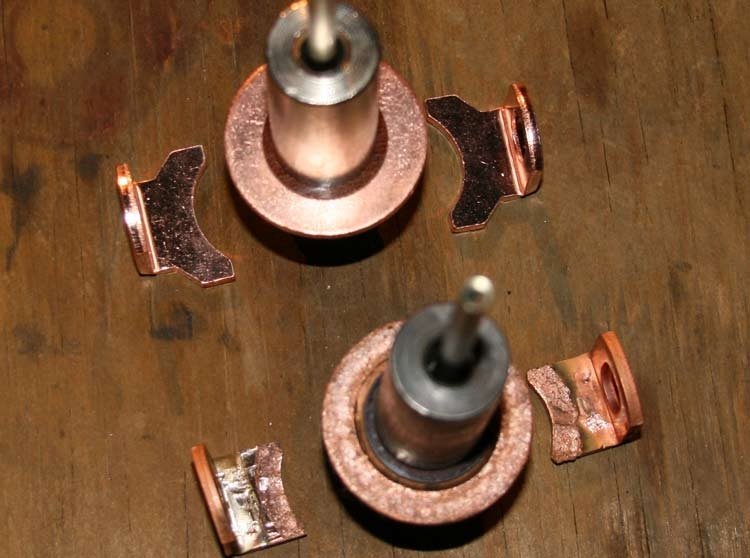
When the wear gets far enough, the pattern is familiar to any technician. The plunger still pulls in with a solid clunk, but the worn contacts pass little or no cranking current, so the engine does nothing. A single click with no crank points this way. It is a clue rather than a verdict, since the same sound can come from a weak battery, a corroded cable, or a poor ground, and those get checked before anyone condemns the solenoid.
The reason two solenoids that look identical can sell at very different prices often comes down to this disc. Contact material grade, surface finish, and the alignment of the disc against the terminals all determine how many arcs the part can absorb before the connection degrades. A marginal disc may pass an out-of-the-box test perfectly and still die in a fraction of the cycles a properly specified one survives.
Erosion is not the only way contacts fail, either. Severe arcing can weld the disc against the terminals, and then the starter keeps cranking after the engine has started. The same symptom can also come from a control circuit that never releases the solenoid, a stuck ignition switch or a welded relay upstream, so a starter that will not shut off is not automatically a solenoid defect.
Most automotive solenoids carry two windings. A pull-in winding does the heavy work, drawing a large current to move the plunger and engage the drive. Once the plunger lands, the current path shifts and a hold-in winding keeps it in place on a much lighter draw. The coil does not simply carry the same heavy current for the whole crank.
What the windings cannot absorb is time. Holding the key down on a hard start, repeated attempts in quick succession, or a control fault that never releases the solenoid keeps current flowing far longer than a normal start, and the winding insulation degrades under the heat until turns short together or the circuit opens.
A burned coil usually shows up as silence. No click, no movement, no response to the start signal. Silence proves little on its own, since the same dead reaction can come from a broken control wire, a corroded connection, or a fault upstream of the solenoid, but an open winding is one of the first things a teardown will confirm or rule out.
From the manufacturing side, winding wire grade and the varnish impregnation set how much heat a coil can shed and how long its insulation holds up under abuse. How long a crank is safe, and how much rest a solenoid needs between attempts, varies by vehicle and by product, so confirm those duty limits against the service information and the supplier's own data rather than assuming a universal figure.
Rapid clicking during a start attempt is usually read as a symptom of a weak battery, which it often is. What almost nobody mentions is that the chattering itself is doing damage.
When system voltage sags, the solenoid pulls in, the load of the motor drags voltage down further, the solenoid can no longer hold, and it drops out. Voltage recovers, it pulls in again. Each of those cycles is a full-power make and break across the contact disc, complete with arc, so a solenoid that chatters through repeated failed attempts can wear its contacts well ahead of a normal service pattern.
The sourcing implication is easy to miss. Wherever the vehicles being served run aged batteries and marginal charging systems, chatter-induced contact wear can show up in returns looking like a quality problem while the parts were built to spec. Whether that is actually happening in a given market is a question the return data itself has to answer.
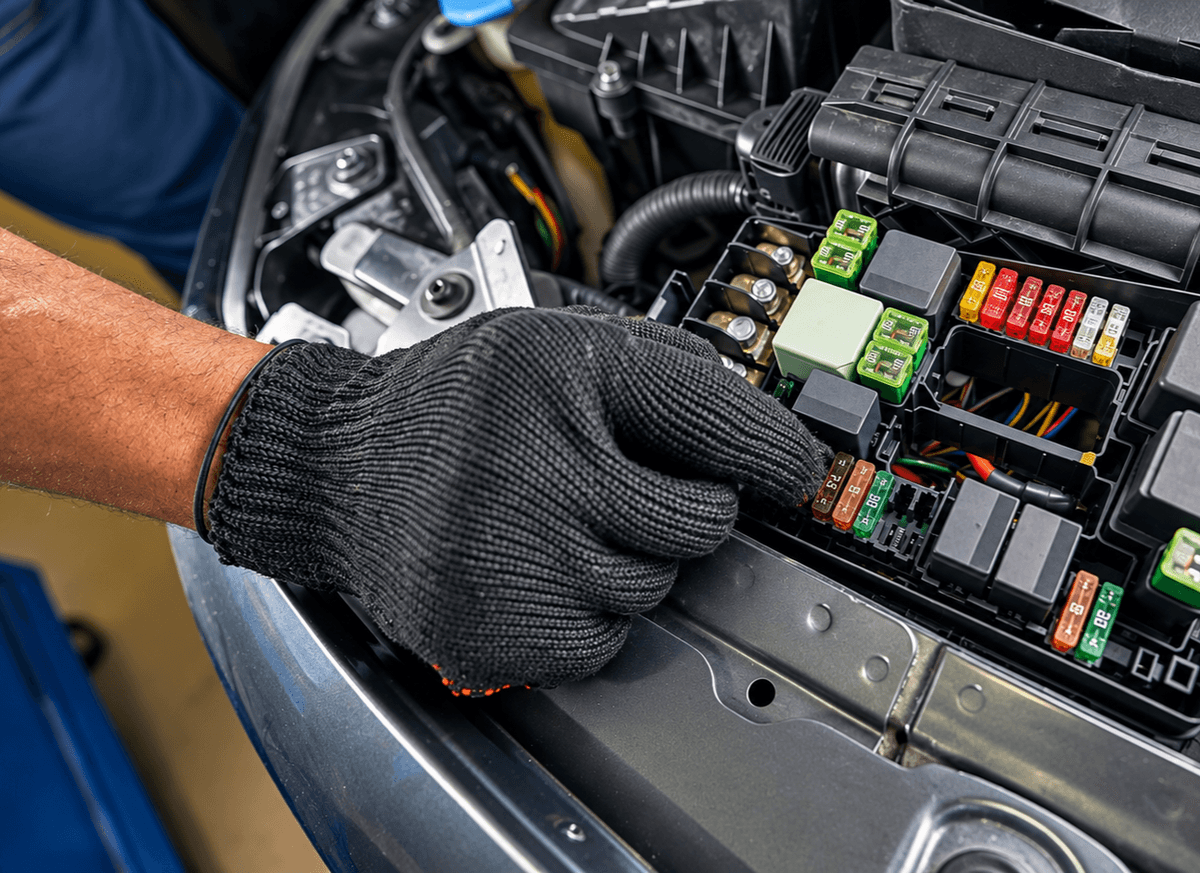
One confusion worth clearing up here. Rapid clicking is also a symptom associated with a failing starter relay, and the two components get blamed for each other constantly. They sit in different parts of the starting circuit and carry very different currents, so before replacing either one, check the battery state and the main connections, then confirm where the clicking is actually coming from.
Not every solenoid moves its plunger on the same scheme. Some designs run on a thin film of lubricant, some specify a particular grease, and some working surfaces are meant to stay clean and dry. Whatever the design, the plunger has to travel freely for the solenoid to engage the drive and close its contacts.
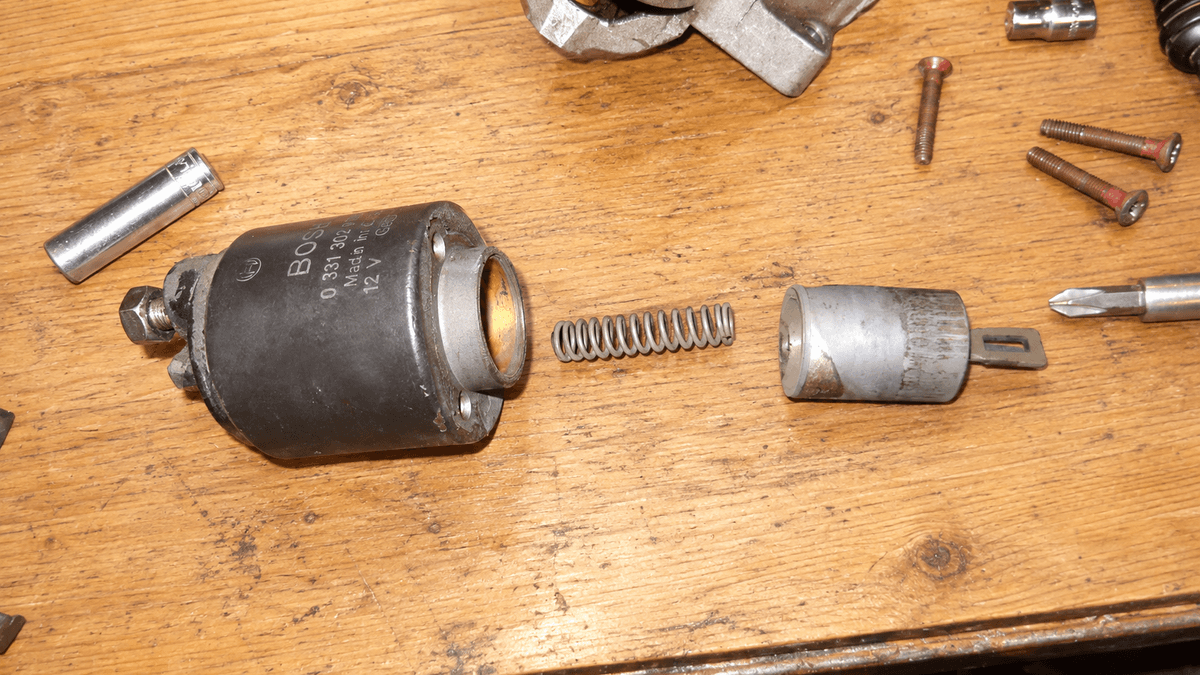
Cold-weather sluggishness can come from several of those factors at once. A lubricant stiffened below its working range, contamination past a marginal seal, tight clearances, or light corrosion on the sliding surfaces can each slow the plunger, and the symptom pattern is intermittent and temperature-dependent, which makes it one of the more misdiagnosed failures. A sticking plunger can masquerade as a battery fault or a control circuit fault for weeks before it fails hard.
For buyers serving cold-climate customers, the useful questions are whether the product has validated low-temperature actuation and what lubrication or maintenance it calls for. Whether a supplier publishes a grease specification matters less than whether they can show the test behind it, and a published spec with no low-temperature data behind it says little anyway.
The same mechanism has one more failure worth knowing. A plunger or return mechanism that sticks engaged, or a control circuit that stays energized, can leave the starter running after the engine has started. The noise makes the fault obvious. The cause is not always inside the solenoid.
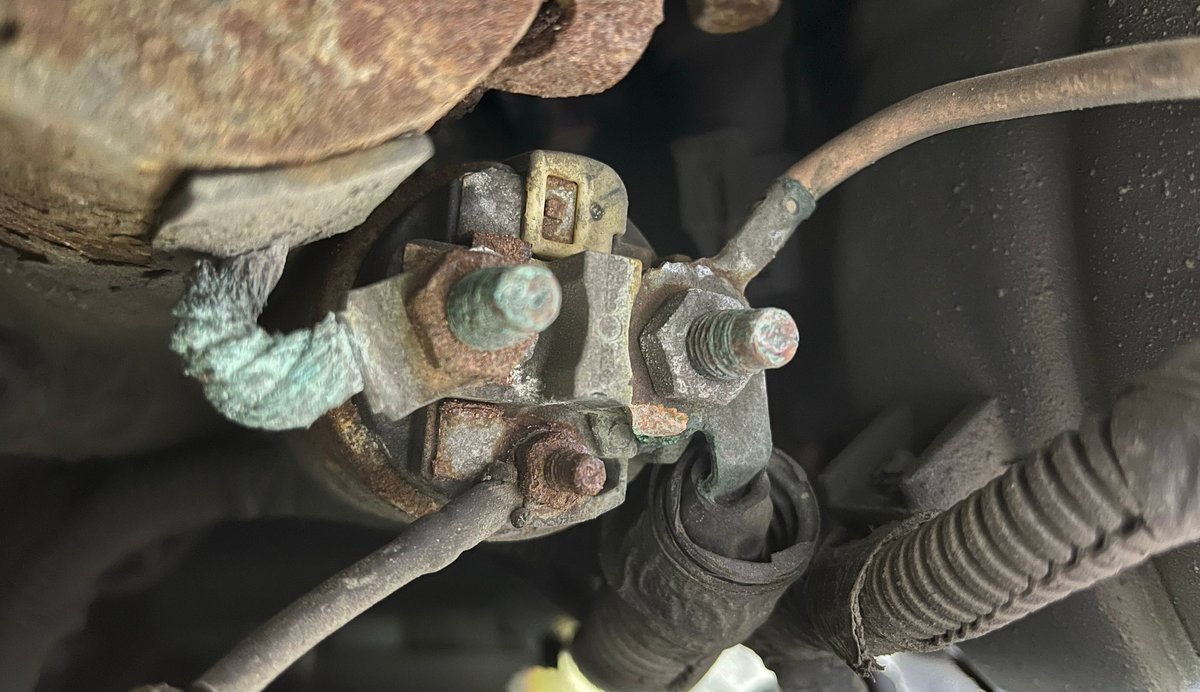
Water finds solenoids through three doors. Cap seals that have aged or were never well fitted, terminal boots that leave the stud bases exposed, and simple condensation cycling through temperature swings. Once moisture is inside, corrosion attacks the contact surfaces and the terminal junctions.
Which circuit the corrosion lands on decides the symptom. Corrosion on the main current connections adds resistance in the path that feeds the motor, which shows up as voltage drop, heat at the terminals, and labored or failed cranking. Corrosion on the control side can leave the solenoid too little current to pull in at all, which looks from the outside like a dead coil. Either way the part gets blamed and returned when the root cause was environmental, and salt spray or winter road salt only accelerates it. The defense is decided at production, in the seal design and the plating on the terminals.
Not every early failure is a defect or an environment problem. Some solenoids are simply asked to do the wrong job.
The cleanest example is voltage. A 12V solenoid installed on a 24V system can overheat its coil. A 24V solenoid on a 12V system may not develop enough pull to engage reliably, or may drop into the chatter pattern described earlier. Both failures look like bad parts to the end user, and neither is.
Duty mismatch is subtler. A solenoid specced for passenger car starting will not live long on a diesel work truck cranked hard every cold morning, or in delivery fleets doing dozens of starts a day. The part was fine for its design duty and wrong for the application. Matching the solenoid to real operating conditions, not just to the vehicle listing, is the fix.
The six patterns above do not sort cleanly into factory faults and vehicle faults, and no single worn surface settles responsibility on its own.
An eroded disc might reflect contact material or disc alignment, but it can just as easily reflect a chatter history or a duty cycle the part was never rated for. A burned coil might point to insulation quality, or to a control circuit that held the solenoid engaged far too long. Corrosion might implicate sealing, or the environment the vehicle worked in and the condition of the connections outside the solenoid.
What a teardown gives is a place to start. Read together with batch records, the vehicle's history, supply-voltage checks and test results, it separates a manufacturing defect from a condition problem with something closer to evidence than an argument. Suppliers respond very differently to a claim framed that way than to a box of parts with a complaint.
A bench test on incoming samples adds one more layer of certainty, since it measures engagement and current behavior before the part ever reaches a vehicle.
Do starter solenoids fail suddenly or gradually?
Many fail gradually in terms of what is physically happening, since contact erosion and insulation aging build up over many cycles. The owner experiences it as sudden because the degradation stays invisible until the day the contacts can no longer carry current at all. A solenoid that starts the engine normally most mornings and fails occasionally is telling you the end is near.
Can a failing solenoid damage the starter motor?
Yes, and one of the paths is expensive. On starter-mounted designs where the solenoid shifts the drive, a plunger that moves sluggishly can let the gear engage partially and chew teeth on the drive and the ring gear. Reduced voltage through worn contacts forces longer cranking attempts, which heats the motor windings. And contacts that have welded shut, or a plunger that cannot release, leave the starter running after the engine has started, which can destroy the motor quickly. That last symptom can also come from a control circuit that keeps feeding the solenoid, so the wiring gets checked before the part gets blamed. The solenoid is the cheaper half of the pair, so delaying replacement rarely saves money.
What is a reasonable service life for a starter solenoid?
Any single number is misleading because life depends on climate, cranking frequency, and battery health in the vehicles it serves. A solenoid in a mild climate, well-maintained passenger car can outlive several other components around it. The same design in a delivery fleet with hard daily duty may need replacement far sooner. Judge suppliers on cycle test data and warranty terms rather than on claimed years of life.
What warranty terms are reasonable for aftermarket solenoids?
Warranty length varies by market and supplier, and a stated duration says less than the terms behind it. What to examine is the coverage itself: whether electrical failure after installation is covered, what evidence a claim requires, how the claim process works, and how failures traced to application mismatch or installation error are handled. A supplier who has genuinely studied their failures will discuss exclusions in specifics, not in blanket fine print.
Should we stock solenoids separately or as complete starter assemblies?
It depends on how vehicles are actually repaired in the market you serve. Where starters get rebuilt or the solenoid mounts remotely and is replaced on its own, standalone solenoid stock turns over. Where repair practice swaps the entire starter assembly, the solenoid alone sees little demand regardless of vehicle age. Local labor rates, parts availability and rebuild habits shape that as much as the vehicle parc does, and a look at your own sales data by application answers it faster than any general rule.
Starter Solenoid
Learn the difference between a starter solenoid and starter relay, including their functions, current loads, locations, and applications.

Starter Solenoid
A starter solenoid that passes a bench test can still fail under real starting conditions. What matters for bulk orders is confirmed specifications, tests under load, samples from production tooling, and batch traceability that can contain a defect.
Starter Solenoid
Learn the difference between a starter solenoid and starter relay, including their functions, current loads, locations, and applications.
Starter Solenoid
A starter solenoid that passes a bench test can still fail under real starting conditions. What matters for bulk orders is confirmed specifications, tests under load, samples from production tooling, and batch traceability that can contain a defect.