
Truck bed steps turn an awkward reach into a secure foothold. They mount near the tailgate, bumper, or bed side. This overview covers how they work, the main types, fitment and materials, plus selection guidance for owners, distributors, and fleets.
Truck bed steps turn an awkward reach into a secure foothold. They mount near the tailgate, bumper, or bed side. This overview covers how they work, the main types, fitment and materials, plus selection guidance for owners, distributors, and fleets.
Pickup beds sit higher than they did twenty years ago, and the tailgate lip keeps rising with them. From flat ground, getting into the bed means either a jump that lands hard on the knees or a stretch that pulls at the lower back. A truck bed step removes that problem with one stable foothold, and loading tools, cargo, or a week of camping gear stops being a balancing act.
Factory bed steps already come on Ford, Ram, and GM trucks, and the aftermarket has expanded the idea to a wide range of models and mounting styles. The right choice depends on who is asking. A contractor wants something that holds up on a muddy jobsite. A distributor wants to cover the truck models people actually drive. Both start from the same basics, and that is where we begin.
A pickup truck bed step is a small platform mounted near the tailgate, the rear bumper, or the side of the bed. It gives the foot a solid place to land so the climb into the cargo area does not turn into a jump or a stretch. Many units fold or retract out of the way when not in use, while fixed and receiver-mounted designs do not.
The label covers several distinct products, from tailgate steps that swing out beneath the tailgate to bumper steps, side bed steps, and hitch steps that slide into the trailer receiver. Same problem, different places, different behavior in daily use.
One term to clear up. A bed step is not a stepside bed, the classic body style with the rear fenders outside the cargo box, though searches for "step bed truck" sometimes return that older design. This article is about the steps that help you climb into a modern pickup bed.
The mechanism is simple. A platform rides on a bracket with a pivot or a slide that moves it between stowed and deployed positions, stowed flush under the tailgate or bumper, deployed outward and locked.
Many retractable models are spring-assisted. A nudge with the foot overcomes the spring and the step swings out and locks on its own. Stowing works in reverse, push it back until the spring pulls it flush. Factory units from several brands work this way, some with a release tab you push to free the latch.
The load path matters more than the mechanism. Your weight travels through the step into the bracket and then into the frame or bumper structure, and a well-designed unit spreads that load across several mounting points, which is why a published rating is only as good as the installation behind it. A strong step bolted to a rusted bracket is not an upgrade. It is a hazard.
Deployment feel separates products, too. Some steps spring out fast enough to startle, and factory manuals tell operators to stand clear while the step extends, while better designs damp the motion. That shapes how safe the product feels the first time someone uses it, and it is hard to judge from a spec sheet.
Five mounting styles cover the market, and most differences come down to where the step sits and what that does to clearance and appearance. Fixed platforms, folding designs, spring-loaded retractable units, and receiver-mounted products are built differently, so few rules carry cleanly across types.
Retractable bed steps mount under the rear bumper and kick out with a foot tap. They are the default for daily drivers because they disappear when stowed and do not cut into ground clearance, and vehicle-specific units generally cost more than universal ones.
Side bed steps attach to the bed wall ahead of the rear wheel and give access without opening the tailgate. GM fits a factory side step on some Silverado and Sierra models, and the aftermarket covers a wider range of trucks. They earn their keep when the tailgate is blocked by a trailer or when you reach over the side all day.
Tailgate-mounted ladders unfold into two or three rungs instead of a single step and suit lifted trucks where one step will not reach. Some mount without drilling and others require holes in the tailgate, so check the installation method for the specific product. The tradeoff either way is a ladder hanging visibly on the tailgate.
Hitch steps slide into the receiver as fixed platforms and install quickly, though the step has to match the receiver size, since receivers come in more than one dimension. They double as a bumper guard. The downsides are the permanent protrusion past the bumper and the occupied receiver, which matters on trucks that tow.
Portable and tire-mounted steps fold flat, clip over a tire, or stand on the ground. They are for occasional use and live in the cab between jobs, not for loading a bed five times a day, but they answer a camping trip or a roof-rack reach well enough.
Wholesale bed steps are usually cataloged across several of these styles, which suits buyers who would rather consolidate sourcing than chase five suppliers. A basic universal step commonly sells for a few tens of dollars, vehicle-specific retractable units run well into the hundreds, and everything between depends on the product.
|
Type |
Mounting point |
Clearance impact |
Installation |
|
Retractable bed step |
Under rear bumper |
None when stowed |
Usually no-drill, vehicle-specific |
|
Side bed step |
Bed side, ahead of rear wheel |
None |
Bolt-on |
|
Tailgate ladder |
Tailgate |
None |
Drill or no-drill depending on product |
|
Hitch step |
Hitch receiver |
Sticks out past bumper |
No vehicle modification |
|
Portable / tire step |
None |
None |
None |
Truck bed step fitment is where mistakes happen, on both the retail and the wholesale side. A step built for a specific truck generation bolts on in minutes. One that is close enough needs shims, extra holes, or a return label.
Model-specific units are built around real mounting points, and the details follow the vehicle. Model year, trim, bumper style, exhaust routing, receiver setup, and factory equipment can all change whether a given step fits, because each can occupy or alter the mounting surface. Excluded configurations in a listing are usually physical rather than arbitrary, since a dual-exhaust truck may run the tailpipe through the space where the bracket mounts and off-road trims carry different rear bumpers. When a listing warns that a step does not fit a trim, something is almost always in the way.
Confirm fitment against the vehicle VIN, the supplier's application list, or a verified cross-reference rather than a product photo. Where an aftermarket step references a factory part number, treat the number as a match reference, not proof that the aftermarket unit matches the original in material, hardware, or build quality. Two products can share a listed reference and still differ in the ways that matter.
Hitch steps sidestep most of this by mounting to the receiver instead of the body, but they are not entirely universal either. The step must match the receiver size, and an adapter used to bridge a size difference is another point to check for play and fit. Ground clearance, parking sensors, exhaust position, and towing requirements can all affect whether a receiver-mounted step works on a given truck, so for a vehicle that tows regularly, occupying the receiver is often the wrong trade.
Choosing a truck bed step starts with the truck, not the product. Confirm the make, model, year, and trim, and check the usual exclusions before looking at materials. A perfect step that does not fit is a paperweight.
Truck bed step weight capacity deserves more attention than it usually gets. Ratings commonly listed sit in the 300 to 400 lb range, with some hitch steps higher, but the number is only a starting point. Published capacity is typically established under a specified installation method and test conditions, so the bracket, mounting points, fasteners, and vehicle structure have to be up to the same standard as the platform, and a static rating says little about a shifting, impulsive load or years of repeated use. Beyond the number, the platform has to fit a boot, and a wide, flat surface feels very different underfoot from a narrow one.
Material choice is mostly an environment question. An aluminum bed step usually weighs less and holds up well against corrosion, which makes aluminum the common pick for retractable steps that live under the bumper. A steel bed step can offer higher rigidity at a lower material cost, but it leans on its coating and surface treatment to keep rust away. Neither wins outright, because actual durability comes down to alloy grade, material thickness, weld quality, coating, fasteners, and drainage. For trucks that see road salt or coastal air, corrosion protection should outrank small price differences.
Installation complexity is the other practical filter. A no-drill bed step clamps to existing bumper or frame hardware, though the actual time depends on the vehicle, the hardware condition, and access to the mounting points. Steps that require drilling can fit better on some trucks, but the stakes rise if a hole lands wrong, and for anyone selling these products, install difficulty shows up directly in return rates.
Appearance comes last, but it matters. A retracted step that looks factory sells on a daily driver, and an off-road truck carrying a fixed step will feel it on the first obstacle. Match the style to how the truck is actually used.
Buying bed steps in volume for a store, a catalog, or a fleet changes the calculation, because the product is only part of what you are judging.
Application coverage drives what a catalog can actually sell. The suppliers worth talking to cover current-generation steps for the pickup platforms their customers drive, with older generations and excluded trims handled explicitly. Start by comparing the application lists of wholesale bed step suppliers rather than their photos, because coverage is what turns a catalog into sales.
Cross-reference discipline matters for the same reason. A step that references a factory part number shows up in more searches and points at a known vehicle population, but the reference is only the beginning of the check, so ask the bed step supplier for the application list, confirm that model years and exclusions line up, and verify the actual dimensions and hardware rather than trusting the number alone. Wrong year coverage is a common catalog error and an expensive way to burn margin on returns.
QC verification before a bulk order is non-negotiable, and samples only help if you test the right things. Static load testing checks the rating, repeated deployment cycling exposes spring and pivot wear, and salt spray exposure shows whether the coating survives real winters. When a supplier cannot share test results for a specific product, the answer is not to walk away automatically but to add sample validation, request additional documentation, or test the samples yourself. Verification before the order is always cheaper than after a complaint.
Failure modes follow a predictable pattern. Retractable steps fail at the spring, the pivot pin, or the locking tab. Welds crack on overloaded fixed steps, and hardware rusts before the step does when the coating is thin. Every one of these is cheap to prevent at the factory and expensive to handle as a return.
Packaging belongs in the same conversation. Bed steps ship as assembled units in individual cartons that protect the coating and keep mounting hardware together, and a few dollars per carton multiplies across a container, so scrutinize packaging before negotiating price. Also confirm that the supplier states the common fitment exclusions in their listings, so customers do not discover them at the tailgate.
On the systems side, keep two things separate. IATF 16949 and ISO 9001 are quality management certifications that describe how a factory controls its processes. Load, cycle, corrosion, vibration, and deployment testing are product-specific verification, and only those reports speak to how a particular bed step performs. A certification does not replace a test report, and a useful report is tied to the part number, material, and production version you are buying. Ask for both.
Installation time depends on the truck more than the step, and a no-drill unit that goes on quickly to a clean, late-model truck can take considerably longer on an older one with rusted hardware or tight clearances. Follow the manufacturer's torque specifications rather than guessing, and run the deployment a few times before calling the job done. Where drilling is required, use the template, because a misplaced hole in a tailgate is hard to walk back. A full walkthrough is a topic of its own.
Maintenance is light but not nonexistent. Retractable steps collect mud and salt in the pivot area, so a seasonal rinse keeps the motion smooth. Lubrication helps too, but choose it according to the product instructions, since the wrong lubricant can attract grit or degrade plastic bushings and finishes. Check the mounting hardware twice a year, more often on work trucks. Step pads and springs are replaceable on many quality units, worth confirming at purchase if the truck will be kept long term.
Minimums vary by supplier. Some quote a per-SKU MOQ, others calculate the minimum across a mixed order, and some tie it to packaging or customization, so confirm the structure before planning the first order. A mixed first order tests several applications without deep commitment, and the lines that move can scale from there.
OEM bed steps are usually sold as dealer-installed accessories at a premium. An aftermarket unit that references the same factory part number can sit under that price and still carry margin, but the number alone does not establish fitment confidence, so verify the actual dimensions, mounting position, hardware, and vehicle exclusions before trusting the cross-reference. Universal steps compete on price alone, so margins run thinner and returns need closer watching.
Expect coverage for material and workmanship defects over a defined period. Beyond the length of coverage, the details determine what a warranty is worth, so check the wear-part exclusions, the claim procedure, whether replacement or credit is offered, and who carries labor and shipping on a claim. A multi-year term is one signal among several, not a substitute for product validation.
A step occupying the receiver blocks towing entirely and has to come out before a trailer is connected. Bumper- and tailgate-mounted steps generally leave the receiver and trailer wiring alone, but clearance around the hitch depends on the mounting position and the vehicle application, so confirm rather than assume. For a truck that tows regularly, a step out of the receiver is the practical choice.
Some are. Side-mounted and certain retractable designs can be built for the driver side or the passenger side, some trucks offer mounting positions on both sides, and rear bumper, tailgate, and receiver-mounted products usually do not distinguish at all. Check the part number, the stated mounting position, and the application data before ordering, because a driver-side step will not bolt where a passenger-side unit belongs.
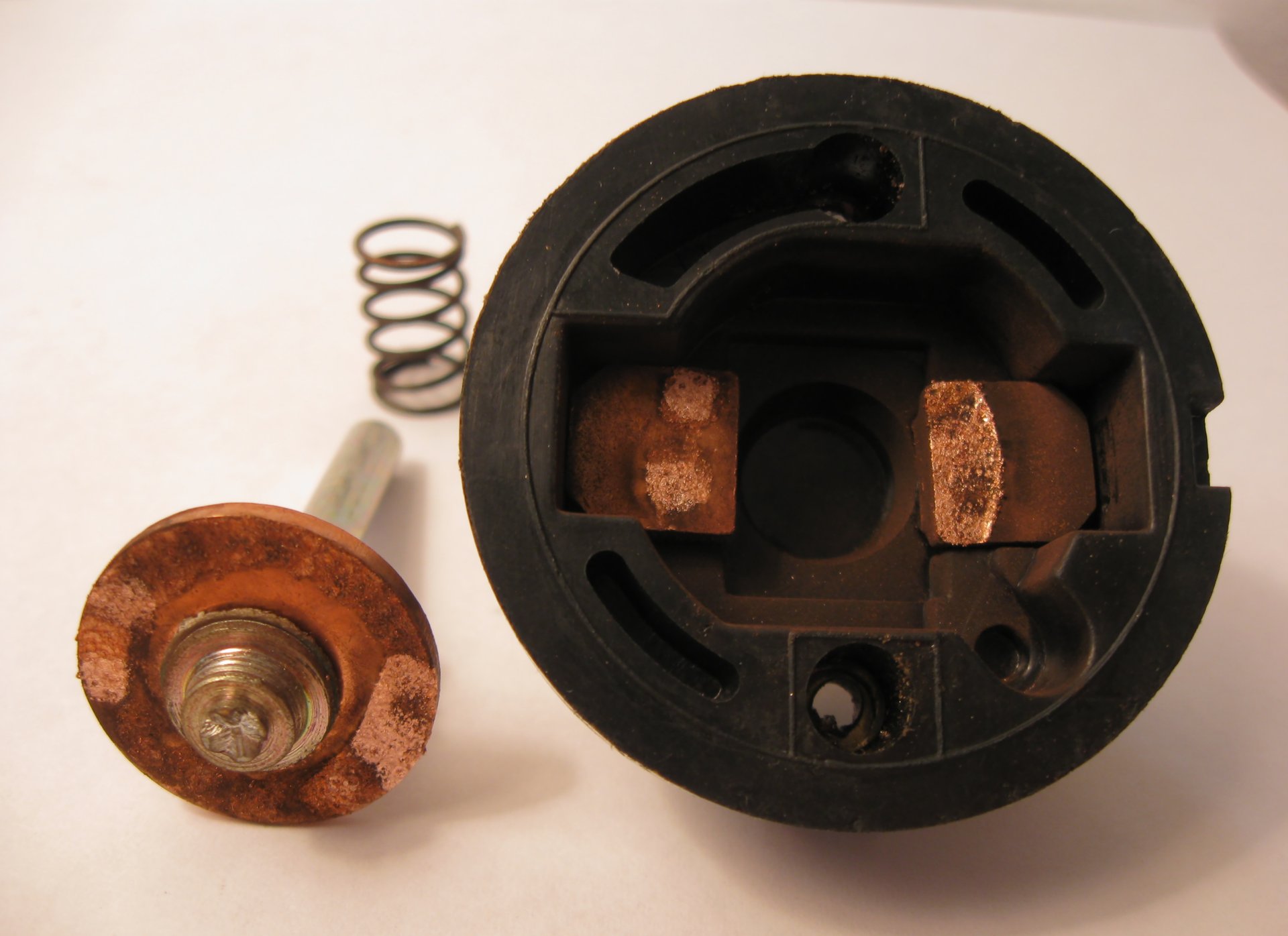
Starter Solenoid
Starter solenoid failures follow recognizable patterns. This guide separates failure modes from operating causes, from contact erosion and coil burnout to low-voltage chatter and corrosion, and shows buyers how to read the evidence in returns.

Battery Relay
Battery relays in heavy-duty use fail more from misread ratings than bad manufacturing. This article covers duty ratings, temperature derating, cycle life, smart alternator compatibility and sourcing checks for wholesale buyers.
Starter Solenoid
Starter solenoid failures follow recognizable patterns. This guide separates failure modes from operating causes, from contact erosion and coil burnout to low-voltage chatter and corrosion, and shows buyers how to read the evidence in returns.
Battery Relay
Battery relays in heavy-duty use fail more from misread ratings than bad manufacturing. This article covers duty ratings, temperature derating, cycle life, smart alternator compatibility and sourcing checks for wholesale buyers.