
Compare OEM and aftermarket auto parts from a B2B sourcing perspective, including fitment, specifications, quality control, cross-reference data, supply stability, and supplier evaluation.
Compare OEM and aftermarket auto parts from a B2B sourcing perspective, including fitment, specifications, quality control, cross-reference data, supply stability, and supplier evaluation.
When sourcing automotive replacement parts, OEM and aftermarket products can serve different business needs. For B2B buyers, the decision should go beyond price. Fitment, specifications, quality control, cross-reference data, supply stability, warranty, and target-market demand all need to be considered.
An OEM (Original Equipment Manufacturer) part is produced by the original equipment manufacturer or a supplier working for the vehicle manufacturer. OEM parts are generally identified through vehicle-specific part numbers and are associated with the specifications used for the original vehicle application.
For B2B buyers, OEM parts can provide a straightforward reference point when confirming fitment and specifications. However, purchasing OEM parts is not always the only way to meet replacement demand in the aftermarket.
Distributors, wholesalers, repair businesses, and online auto parts sellers often need alternatives that can provide compatible fitment while supporting different price points, product availability, and sourcing requirements.
Aftermarket auto parts are replacement components produced by companies other than the original vehicle manufacturer.
The aftermarket covers a wide range of suppliers and product qualities. Some manufacturers focus on cost-efficient replacement parts, while others invest heavily in engineering, testing, production control, and long-term product development.
This means "aftermarket" should not automatically be treated as a description of quality.
For B2B buyers, the more useful question is:
Does the aftermarket supplier provide a product that meets the required specifications consistently and can be supplied reliably at the expected volume?
For example, SINTLY currently supplies starter solenoids, battery relays, starter relays, starters, alternators, oil filter housings, and bed steps for global aftermarket customers. Its product catalogue includes extensive OE and aftermarket cross-reference information.
| Factor | OEM Parts | Aftermarket Parts |
|---|---|---|
| Manufacturer | Original equipment manufacturer or designated supplier | Independent aftermarket manufacturer |
| Identification | Usually based on OEM part numbers | OEM numbers, aftermarket references, or manufacturer numbers |
| Product choice | Often tied closely to original applications | Can offer broader product and sourcing options |
| Pricing | Typically positioned around OEM supply channels | Can provide different pricing options |
| Availability | Depends on OEM distribution | May offer alternative supply channels |
| Product range | Usually vehicle-specific | Can cover multiple brands and applications |
| Customization | Generally limited | Some suppliers may support different specifications or packaging |
| B2B sourcing | Often through authorized channels | Direct factory and aftermarket supply are common |
The important point is that this table describes sourcing characteristics rather than declaring one category universally better.
For a distributor, the appropriate choice depends on the customers being served, market positioning, product requirements, and purchasing strategy.

When evaluating an aftermarket part against an OEM reference, buyers should compare the actual product rather than relying only on the label.
The replacement part must physically fit the intended application.
Depending on the product, check:
A part that looks similar in a catalogue may still have a different mounting configuration or electrical connection. For buyers sourcing complete starting-system components, SINTLY also offers automotive starter motors covering multiple OE numbers and vehicle applications.
For automotive electrical components, specifications are particularly important.
Depending on the product, buyers may need to compare:
For example, SINTLY's starter solenoid product information includes voltage, OE numbers, reference numbers, starter numbers, and vehicle/application information. This type of information allows B2B buyers to evaluate a replacement product using more than appearance alone.
OE cross-reference data is one of the most useful tools when sourcing aftermarket parts.
A distributor may receive an order using an OEM number, while another customer may search using an aftermarket reference number.
A suitable aftermarket product may therefore have several identification routes.
For example, one SINTLY starter solenoid is listed with BOSCH, Mercedes-Benz, AS-PL, HC-Cargo, NEW ERA, UNIPOINT, WAI, and other reference numbers.
However, cross-reference information should be used for identification, not treated as automatic proof that every specification is identical.
Buyers should still confirm dimensions, electrical specifications, application data, and sample performance before approving a bulk order.
For B2B purchasing, the supplier's quality-control process can be more important than whether a product is simply described as OEM or aftermarket.
For a practical example, see our guide to starter solenoid quality control, including specifications, testing, sample approval, and batch traceability.
Ask:
SINTLY states that its quality systems are certified to ISO 9001 and IATF 16949:2016, while its in-house laboratory tests automotive electrical products for electrical performance, mechanical function, durability, fitment stability, and batch consistency. Sintly
For buyers, the useful next step is to ask how those processes apply to the specific product being ordered.
Product quality is only one part of a B2B purchasing decision.
A distributor may need hundreds or thousands of units across multiple part numbers. If a supplier cannot maintain production capacity or consistent specifications, even a good initial sample may not solve the long-term sourcing problem.
Before choosing an aftermarket supplier, check:
This is particularly important when building an aftermarket product line.
A supplier with a broad product range can also simplify sourcing. Instead of managing separate suppliers for every electrical component, a buyer may be able to consolidate related products through one manufacturing partner.
Choosing only by price.
A lower unit price does not automatically mean lower total purchasing cost. Returns, warranty claims, shipping problems, and inconsistent batches can increase the actual cost.
Assuming every aftermarket product has the same quality.
The aftermarket includes many different manufacturers and quality-control systems. Buyers should evaluate the specific supplier and product.
Relying only on an OE number.
An OE reference helps identify a product, but dimensions, specifications, and application should also be verified.
Skipping sample approval.
A sample should be tested and compared before a large order is placed.
Ignoring future supply.
The first shipment may meet expectations, but buyers should also consider whether the supplier can maintain the same specifications and delivery performance for repeat orders.
Before approving a replacement product, buyers can use this checklist:
| Evaluation Area | Questions to Ask |
|---|---|
| Fitment | Does the part match the intended application? |
| Specifications | Are all important technical specifications documented? |
| Cross-Reference | Are OEM and aftermarket numbers available? |
| Sample | Can the product be tested before bulk purchasing? |
| Quality | What inspections and tests are performed? |
| Consistency | Can future batches match the approved sample? |
| Supply | Can the supplier support repeat orders? |
| Packaging | Is the product properly protected and labelled? |
| Warranty | Are claim procedures clearly defined? |
| Support | Can the supplier provide technical assistance? |
No. OEM and aftermarket parts come through different manufacturing and supply channels. An aftermarket part may be designed as a replacement for an OEM application, but buyers should verify its actual specifications, fitment, and performance.
They can be, but pricing varies by product, manufacturer, market, and purchasing volume. B2B buyers should compare total purchasing costs rather than looking only at the unit price.
Check the OE number, aftermarket cross-references, dimensions, specifications, application information, sample performance, and supplier quality-control process before placing a bulk order.
Yes. Sample approval allows buyers to verify fitment, specifications, performance, packaging, and labeling before committing to larger quantities.
Buyers should consider product specifications, quality control, production consistency, cross-reference data, supply capability, lead time, warranty, and technical support together rather than relying on one factor.
The OEM vs aftermarket decision for B2B buyers is not simply a choice between original and lower-cost replacement parts. The right sourcing decision depends on the application, customer requirements, product specifications, quality expectations, purchasing volume, and supply strategy.
For aftermarket buyers, the supplier should be evaluated as carefully as the product itself. A clear specification, verified sample, reliable testing process, consistent production, accurate cross-reference data, and stable supply can all contribute to a more predictable purchasing relationship.
Starter Solenoid
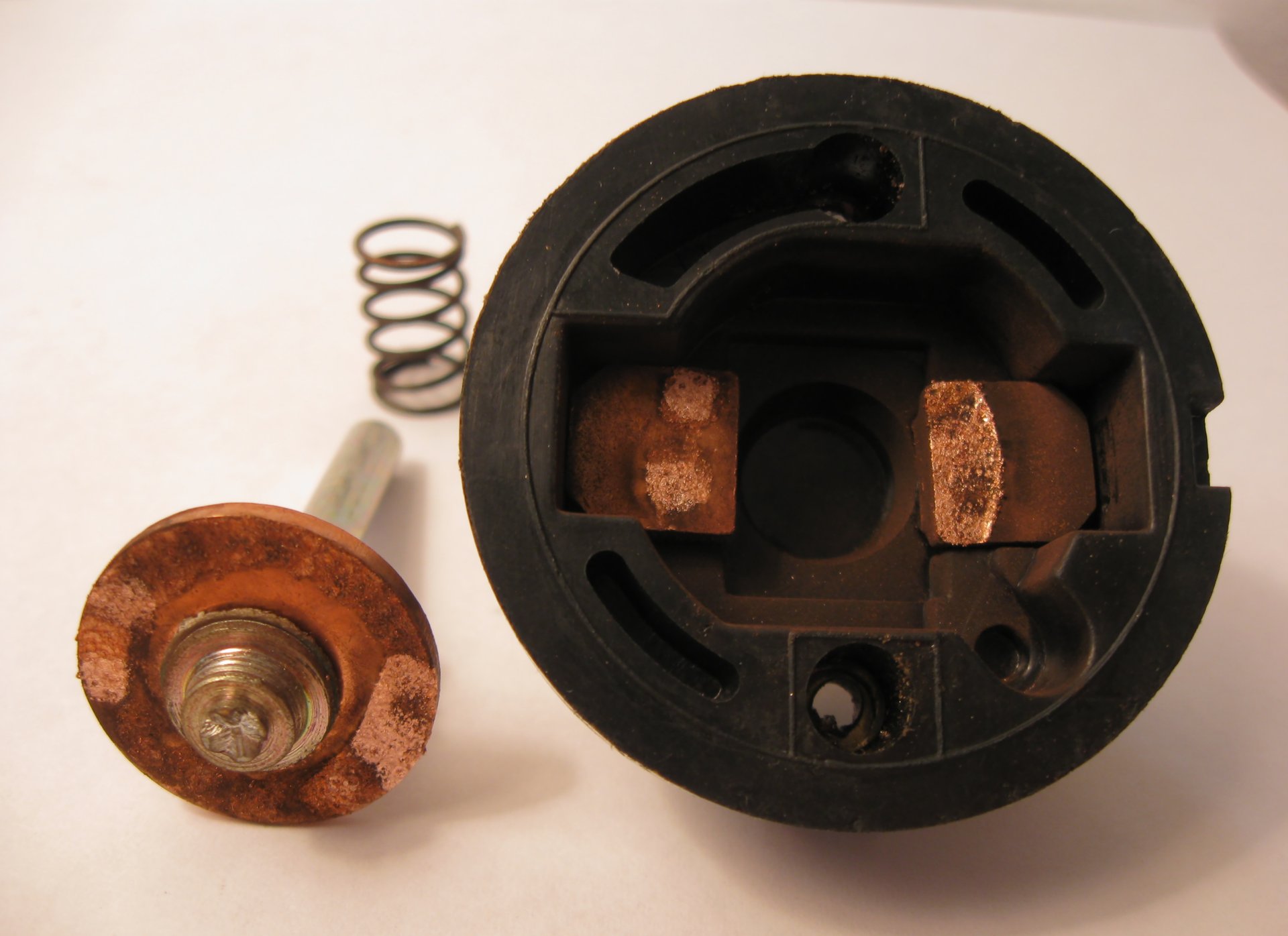
Starter solenoid failures follow recognizable patterns. This guide separates failure modes from operating causes, from contact erosion and coil burnout to low-voltage chatter and corrosion, and shows buyers how to read the evidence in returns.

Battery Relay
Battery relays in heavy-duty use fail more from misread ratings than bad manufacturing. This article covers duty ratings, temperature derating, cycle life, smart alternator compatibility and sourcing checks for wholesale buyers.
Starter Solenoid
Starter solenoid failures follow recognizable patterns. This guide separates failure modes from operating causes, from contact erosion and coil burnout to low-voltage chatter and corrosion, and shows buyers how to read the evidence in returns.
Battery Relay
Battery relays in heavy-duty use fail more from misread ratings than bad manufacturing. This article covers duty ratings, temperature derating, cycle life, smart alternator compatibility and sourcing checks for wholesale buyers.