
A starter motor is the DC motor that cranks an engine to life. How it works, the types on the market, the failure signs worth trusting, the specs to verify before buying, and what separates a dependable supplier from a cheap listing.
A starter motor is the DC motor that cranks an engine to life. How it works, the types on the market, the failure signs worth trusting, the specs to verify before buying, and what separates a dependable supplier from a cheap listing.
Every internal combustion engine has one moment of total dependence, and it's the first turn of the crankshaft. That rotation cannot come from the engine itself, so the starter motor provides it, converting battery power into mechanical rotation just long enough for the cylinders to fire on their own. In that short window the starter switches a high-current circuit, pushes a gear into the flywheel ring gear, and spins hard enough to overcome engine compression. That's a lot to ask of a part most drivers never think about until it fails.
For parts buyers the component is a different animal. Starter specs vary a lot between applications, a wrong fit costs real money, and the quality gap between a cheap unit and a dependable one is wider than with almost any other electrical part. So the rest of this page answers two questions: how the motor works, and what to check before you commit to a purchase.
A starter motor is a high-torque DC electric motor bolted to the engine block near the transmission bell housing. Passenger cars run 12V systems, while heavy-duty trucks and commercial equipment usually run 24V. The motor's only job is to crank the engine. It does not keep the engine running. Once combustion starts, the engine sustains itself and the starter retracts.
The cranking sequence runs in the same order on nearly every vehicle, whether you turn a key or press a start button:
The whole cycle takes a couple of seconds. A healthy gasoline engine commonly draws somewhere in the 150–300 amp range while cranking, and diesels, with much higher compression, can pull 400–700 amps. Thin wiring would melt under that load, which is why starter cables are the thickest in the vehicle.
The solenoid is the part that bridges the signal and the heavy-current side. Its construction and terminals decide how reliably that handoff happens, and it is covered in depth in our guide on how starter solenoids work and why quality matters.
Strip a starter motor down and you find a handful of components, each with a defined role:
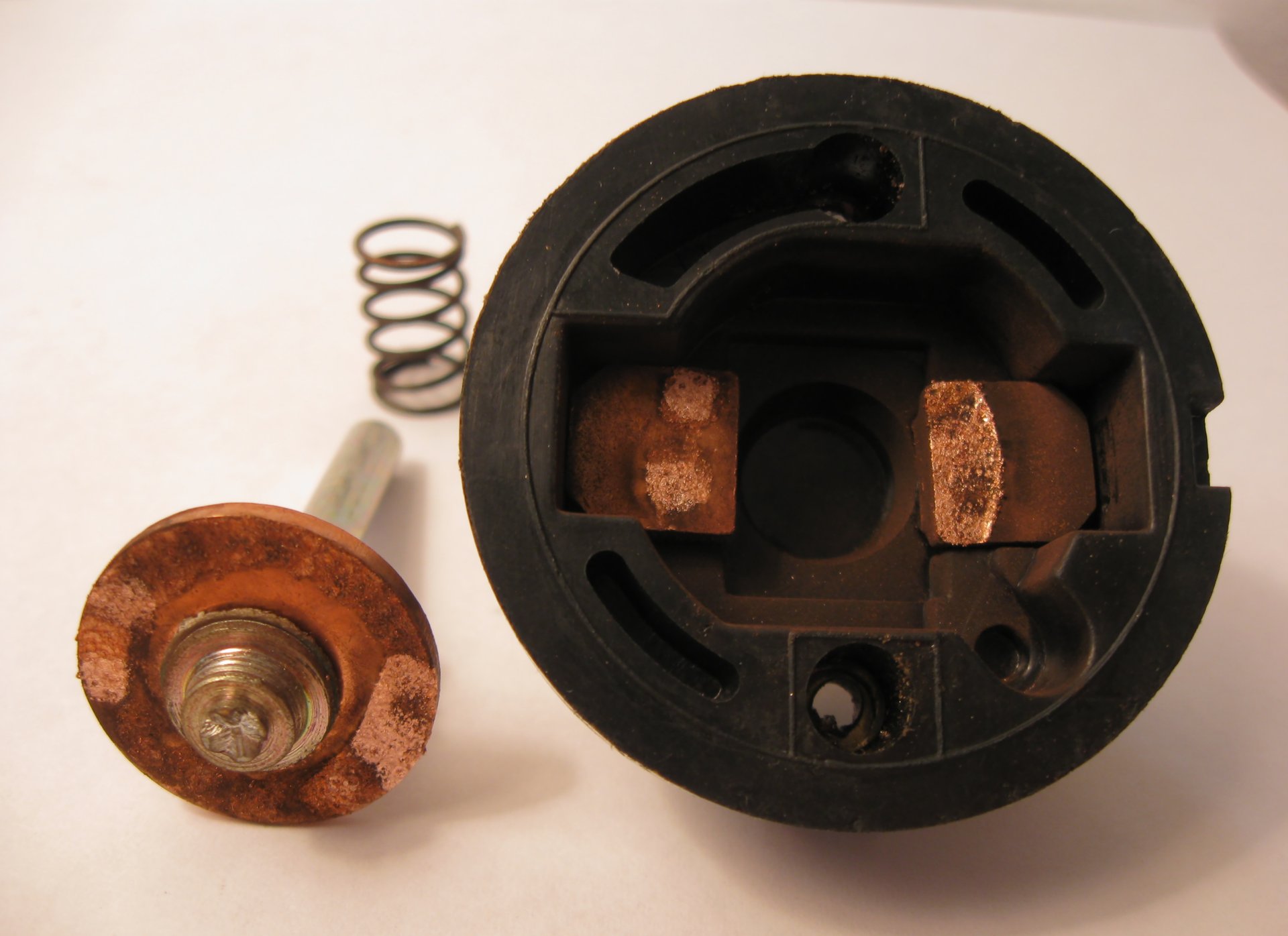
From a buying standpoint three of these deserve attention. The brushes wear and are the usual reason a motor dies; the solenoid contacts arc and pit; a damaged drive assembly grinds against the ring gear. The rest of the starter is largely maintenance-free.
The market splits into a few broad designs. Knowing which one a vehicle takes is the first filter before any purchase.
Direct-drive starters connect the motor shaft directly to the pinion gear. They are the oldest design, simple and robust but heavy, and they pull a lot of current because the motor has to produce full torque by itself. You find them on vehicles from roughly the 1960s through the early 1990s, some commercial applications, and a fair number of classics. Their simplicity is a genuine advantage, with fewer parts to fail and easy service access.
Gear-reduction starters sit a small gearset (spur or planetary) between the motor and the pinion to multiply torque. The motor itself can be smaller, lighter, and faster-spinning, and it draws noticeably less current, often somewhere around a third less than an equivalent direct-drive unit. This design became the standard for passenger vehicles from the mid-1990s onward, largely because engine bays got tighter and battery demands got heavier.
Permanent magnet gear-reduction (PMGR) starters take the gear-reduction idea a step further by replacing the wound field coils with permanent magnets. The result is the lightest and most compact starter type, used in most modern cars and light trucks. The trade-off is that permanent magnets are brittle. Drop one of these starters or hit it hard and you can crack a magnet, which usually means replacing the whole unit.
Two engagement mechanisms are also worth knowing, because they behave differently and fail differently:
Then there are the applications that change the rules entirely. Start-stop vehicles run reinforced starters built for a much higher cycle count, and heavy-duty and diesel starters are bigger, draw more current, and often run on 24V systems, a separate topic covered below.
These four parts sit close together in the electrical system and cause a lot of confusion. In one line, the relay passes a signal, the solenoid turns that signal into a high-current connection and gear movement, the starter spins the engine, and the alternator recharges the battery once the engine runs.
The relay sits in the control path. It lets the ignition switch or ECU drive a small coil instead of switching starter current directly, which protects the switch and shortens the heavy wiring run. The solenoid then does the physical work on the starter itself. For the wiring and failure logic between them, our starter relay guide walks through the full circuit, and the battery relay article covers the related switching components.
The alternator deserves a special mention because a weak alternator is frequently misdiagnosed as a failing starter. The battery never fully charges, cranking gets slow, and the starter takes the blame. If the car starts fine but the battery keeps dying or the dash lights dim while driving, the problem is on the charging side, not the starting side. The alternator parts and functions article explains how the charging system works.
Starters usually give warning before they die, and the sound patterns are fairly specific. The harder part is that a weak battery, corroded cables, or a bad ground can produce almost identical symptoms, so the diagnosis always starts with the battery and connections.
The quick split is simple. Bright dash lights with a single click point to the starter. Dim lights or rapid clicking point to the battery or connections first.
A well-maintained starter on a gasoline car typically lasts 100,000–150,000 miles, which in many cases means the life of the vehicle. Usage drives the variation more than anything else. Repeated short trips are the main killer, because every cold start counts as a full engagement cycle, and a vehicle that starts twenty times a day wears its starter far faster than one that starts twice. Most estimates put a conventional starter at roughly 80,000–100,000 start cycles before internal wear catches up.
Beyond usage, the common killers are a weak battery that forces longer cranking, corroded connections that add resistance, and oil leaks that drip onto the windings. A common rule of thumb is to keep continuous cranking under about 10 seconds before letting the starter cool.
This is where consumer guides usually stop and where the real cost of a mistake shows up. A starter is a fitment-critical part, and "looks similar" is not a spec. Buyers should confirm these six points against the vehicle application:
Some practical sourcing notes. Verify the pinion-to-ring-gear engagement is correct on paper before ordering, because a starter that grinds on first start is not return-friendly in most B2B transactions. And if a bench test matters to your buyers, our how to bench test a starter motor article walks through the three-result test that confirms a unit's condition in minutes.
Commercial vehicles run 24V electrical systems for a practical reason. At the same power output, a 24V system carries roughly half the current of a 12V system. Halving the current halves the cable losses and lets the harness use thinner, cheaper wiring, a significant advantage on a truck with several meters of cable run.
That decision shapes starter design. A typical heavy-duty 24V starter is rated around 4–7 kW and uses thicker windings and heavier duty contacts than any passenger starter. The pinion teeth are often coarser (metric module gearing is common), and the mounting flanges follow SAE standards rather than vehicle-specific patterns, which is why the same starter family covers many engine models.
Buyers handling both markets should keep the two inventories separate. A 12V starter forced onto a 24V vehicle can burn out quickly, and the reverse usually won't crank a diesel. Cross-references are well documented for the common heavy-duty families. Delco Remy's 28MT/37MT series, for instance, cross-reference across dozens of OE numbers.
The buying decision has two layers, the product grade and the supplier.
Product grade. New OEM parts carry factory pricing and are the safest fit, but for many applications a good aftermarket unit at a fraction of the price is the right commercial call. Remanufactured units are rebuilt with new brushes, bearings, and contacts. Genuinely good value if the reman shop is competent, and a gamble if it isn't. The budget end of the aftermarket is where fitment errors and quality-control issues concentrate; on a part as application-specific as a starter, "cheapest listing wins" tends to cost more in returns than it saves.
Supplier. For repeat business, the questions that matter are straightforward. Does the supplier test units before shipping (a bench test standard catches most defects before they reach your warehouse)? Are the electrical specs, OE numbers, and cross-references published rather than vague? Is the factory quality system certified, ISO 9001 at minimum, IATF 16949 for automotive-grade manufacturing? And can they hold consistent inventory across your model coverage? These are the same checks a serious buyer applies to any electrical component, and they filter out the unreliable suppliers faster than any price comparison. SINTLY, for example, has manufactured starter solenoids since 1988 and expanded into full starters, alternators, and relays under ISO 9001 and IATF 16949:2016-certified processes, with our starter product line, starter solenoid range, and starter relay range covering common passenger and commercial applications.
The standard bench test covers three results: free-spin, cranking under load, and no-load current draw. For B2B orders specifically, load-testing a sample from each batch and logging the current draw catches most defective units before they reach your customer's shelf. The failure mode to watch for is a unit that spins free but dies under load.
You can't reliably tell rotation by looking at the pinion or the case. The direction is set by the brush and pole arrangement inside. Check the cross-reference data for the application, or ask the supplier to confirm the rotation spec against the OE number. Where doubt remains, a free-spin bench test shows the rotation clearly.
Ask for the published spec sheet covering voltage, kW, pinion, rotation, and flange, the OE cross-reference list, test records from recent production batches, and the ISO 9001 or IATF 16949 certificate. A supplier that hesitates on any of these usually has something to hide in the electrical specs. Also ask how they handle a defective unit within the first 30 days. The answer says a lot about the product's actual quality.
Real-world returns on low-tier aftermarket starters run higher than most buyers assume, and warranty claims are where the cheap price gets repaid. For planning purposes, treat the return rate as part of your margin rather than an exception. If a starter line keeps coming back, the fault is usually fitment or the solenoid rather than the motor itself.
No. Jump-starting supplies extra power to a weak battery. If the starter motor or solenoid itself is dead, more electrical power won't make it work, and the engine still won't crank.
In the U.S. market, the part typically runs $100–$400 and labor $100–$300, putting a typical installed replacement at roughly $250–$800 depending on vehicle access. Starters buried under the intake manifold push both figures toward the top of the range.
Starter
Learn how to choose a reliable starter supplier for bulk orders. This guide covers specifications, testing, sample approval, quality control, traceability, packaging, warranty, and supplier support to help buyers reduce sourcing risks.
Starter
Bench testing measures a starter motor's voltage, current draw and rotation speed before installation. Readings outside 10-11V under load, 150-250A or 3,000-5,000 rpm reveal shorted windings, worn bearings, poor contacts or gear damage early.
Starter
Learn how to choose a reliable starter supplier for bulk orders. This guide covers specifications, testing, sample approval, quality control, traceability, packaging, warranty, and supplier support to help buyers reduce sourcing risks.
Starter
Bench testing measures a starter motor's voltage, current draw and rotation speed before installation. Readings outside 10-11V under load, 150-250A or 3,000-5,000 rpm reveal shorted windings, worn bearings, poor contacts or gear damage early.