
Learn how to choose a reliable starter supplier for bulk orders. This guide covers specifications, testing, sample approval, quality control, traceability, packaging, warranty, and supplier support to help buyers reduce sourcing risks.
Learn how to choose a reliable starter supplier for bulk orders. This guide covers specifications, testing, sample approval, quality control, traceability, packaging, warranty, and supplier support to help buyers reduce sourcing risks.
When you order starters in bulk, a low unit price is only part of the decision. The right supplier should provide consistent fitment, reliable electrical performance, clear specifications, stable production quality, and responsive support when problems occur. Here’s what buyers should check before placing a large starter order.
Choosing a starter supplier is different from buying a single replacement part.
For a distributor, importer, wholesaler, or repair business, one incorrect or inconsistent batch can affect hundreds or thousands of customers. Returns, shipping costs, installation problems, warranty claims, and delayed deliveries can quickly cost more than the original price difference.
A reliable starter supplier should be able to provide more than a product catalogue. Buyers should look at:
The goal is not simply to find a starter that looks correct. It is to find a supplier that can consistently deliver the same approved product throughout the entire order.
Start by looking at the supplier's product coverage.
A supplier with a broad starter product range may be able to support more applications and consolidate purchasing across multiple part numbers. However, product quantity alone does not prove supplier quality.
Check whether the supplier provides:
For buyers who also source starter solenoids or starter relays, it can be useful to work with a supplier that covers multiple parts in the starting system. This can simplify sourcing and technical communication.
Never approve a bulk starter order based only on a product photo or a short catalogue description.
The exact specifications should be confirmed before the sample is approved.
Depending on the starter model, important specifications may include:
| Specification | Why It Matters |
|---|---|
| Rated voltage | Must match the vehicle's electrical system |
| Current draw | Indicates electrical load during operation |
| No-load speed | Helps evaluate starter performance |
| Rotation direction | Must match the application |
| Mounting dimensions | Determines physical fitment |
| Pinion gear | Must engage correctly with the flywheel |
| Number of teeth | Important for correct starter application |
| Terminal configuration | Must match the electrical connection |
| Solenoid configuration | Affects engagement and starting operation |
| OE/reference number | Helps verify application and cross-reference |
For bulk purchasing, the specification sheet should become part of the purchasing agreement rather than remaining only in an email conversation.
If a supplier changes a component or production process later, the buyer should also know whether the approved specification has changed.
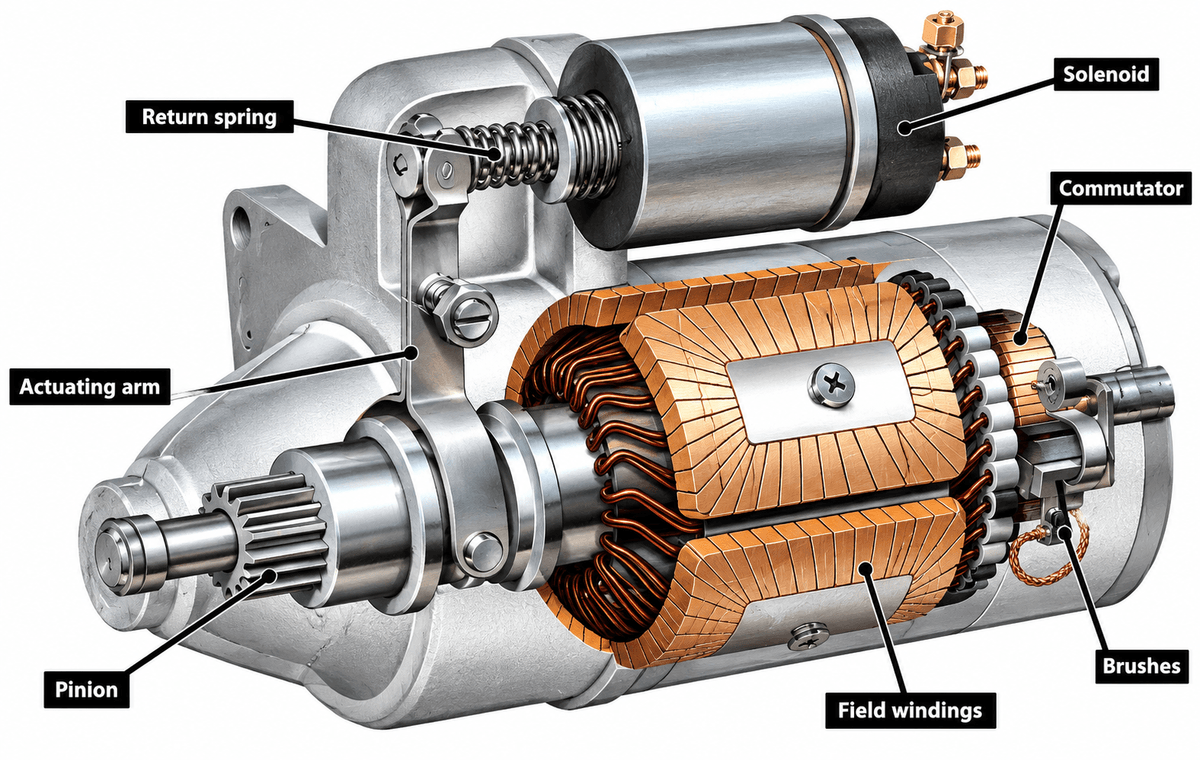
A starter should not be judged only by whether it spins.
A proper bench test can evaluate several important performance indicators, including:
A starter may rotate during a simple test but still perform poorly under load.
For example, excessive current draw may indicate an electrical or mechanical problem, while insufficient rotation speed can prevent reliable engine cranking.
SINTLY's guide to bench testing a starter motor provides a practical example of how voltage, current, and rotation speed can be checked before installation.
SINTLY's guide to bench testing a starter motor explains how voltage, current draw, and rotation speed can be checked before installation.
For bulk orders, buyers should ask the supplier:
The important point is not simply having a long list of tests. The supplier should be able to explain how each test relates to starter performance.
A sample should be treated as the reference standard for the future production batch.
Before approving a starter sample, check:
Compare:
Check:
Observe whether:
If possible, compare the sample with the original starter or an approved reference unit.
The more precise the sample approval process, the easier it becomes to identify production variation later.
A supplier's quality system matters because bulk purchasing is ultimately about consistency.
Ask how the supplier controls quality from incoming materials to finished products.
A typical process may include:
Incoming Material Inspection
        ↓
Component Inspection
        ↓
Assembly
        ↓
Electrical Testing
        ↓
Performance Testing
        ↓
Final Inspection
        ↓
Packaging
        ↓
Shipment
For each stage, the buyer should understand what is being checked and what happens when a product fails. Buyers can also learn more about starter solenoid quality control and the key checks used before bulk orders.
A supplier may have a large product catalogue, but if the production process is not controlled, the quality of the first sample may not represent the quality of the next 5,000 units.
SINTLY states that its manufacturing and quality systems are certified to ISO 9001 and IATF 16949:2016, with quality inspections performed throughout production. For buyers evaluating suppliers, the useful next step is to ask how those systems are applied to the specific starter being ordered.
OE and aftermarket numbers are important tools for identifying starters, but they should not be treated as automatic proof of compatibility.
A single starter can have multiple:
Before placing an order, compare the complete application information.
For example, verify:
Part number → OE reference → Starter application → Voltage → Physical dimensions → Electrical specifications
This reduces the risk of ordering a visually similar starter that is technically different.
Cross-reference information is particularly important for distributors because customers may search for the same product using different numbers.
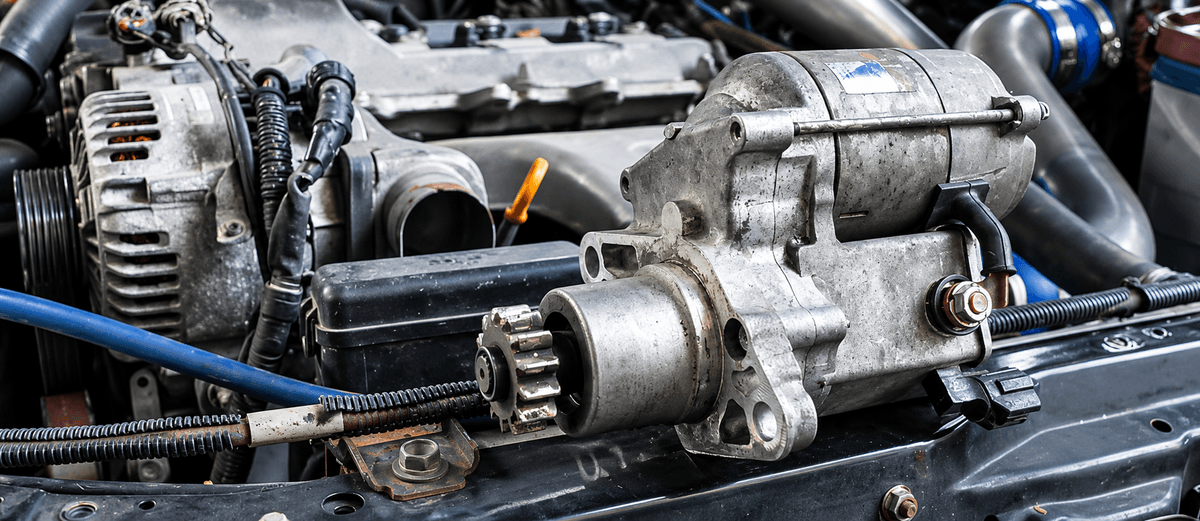
A good sample is not enough.
The supplier must also be able to reproduce the same product consistently.
Ask whether finished products can be traced by:
Traceability becomes especially important when a distributor receives a warranty complaint.
If one starter fails, the supplier should be able to determine whether the problem is isolated or whether other units from the same production batch may be affected.
Good traceability allows a supplier and buyer to contain a problem without unnecessarily recalling an entire inventory.
Starters contain precision mechanical and electrical components, so packaging is part of product quality.
Before a bulk shipment, confirm:
Packaging should also prevent products from moving excessively during transportation.
For international orders, buyers should consider the entire journey from factory to warehouse. A product that leaves the factory in perfect condition can still arrive with damaged terminals, cracked housings, or surface corrosion if packaging is inadequate.
Warranty terms should be clear before the purchase order is placed.
Confirm:
More importantly, ask what happens when the same problem appears across multiple units.
A reliable supplier should investigate the root cause rather than simply replace individual parts.
For distributors, technical support can be just as important as warranty coverage. When a customer reports a starter problem, the supplier should be able to help determine whether the cause is the starter, battery, wiring, installation, or another part of the starting system.
Before placing a bulk order, buyers can use the following checklist:
Before approving a bulk starter supplier, make sure you can answer "yes" to the following:
| Check | Approved? |
|---|---|
| Product specifications confirmed | ✓ |
| OE and cross-reference data verified | ✓ |
| Sample tested | ✓ |
| Fitment confirmed | ✓ |
| Electrical performance tested | ✓ |
| Production quality controlled | ✓ |
| Batch traceability available | ✓ |
| Packaging reviewed | ✓ |
| Warranty terms confirmed | ✓ |
| Technical support available | ✓ |
A supplier that can provide all of this information is much easier to evaluate than one that competes only on price.
When purchasing one starter, a product problem affects one vehicle.
When purchasing thousands of starters, the same problem can affect an entire customer base.
That is why bulk sourcing should focus on repeatable quality, not just individual product quality.
The best supplier relationship is built around an approved specification, tested samples, controlled production, traceability, clear communication, and continuous improvement.
For buyers looking for automotive electrical components beyond starters, SINTLY also supplies [starter solenoids], [starter relays], alternators, and battery relays for aftermarket applications.
Compare product coverage, specifications, OE references, sample quality, testing procedures, production controls, traceability, warranty, packaging, and technical support. Price should be evaluated together with these factors rather than by itself.
At minimum, verify fitment, voltage, current draw, rotation speed, gear engagement, and basic operating performance. More detailed testing should be based on the specific starter application.
Yes. A production sample gives the buyer an opportunity to verify fit, specifications, performance, packaging, and quality before committing to a large quantity.
No. An OE number is useful for identification and cross-reference, but buyers should also verify voltage, dimensions, mounting, gear specifications, rotation direction, and application.
A reliable manufacturer should have controlled production, documented testing, consistent specifications, traceability, quality management, and the ability to provide technical support when problems occur.
Start with a clear specification, approve production samples, define testing requirements, confirm packaging, establish batch traceability, and agree on warranty and claim procedures before production begins.
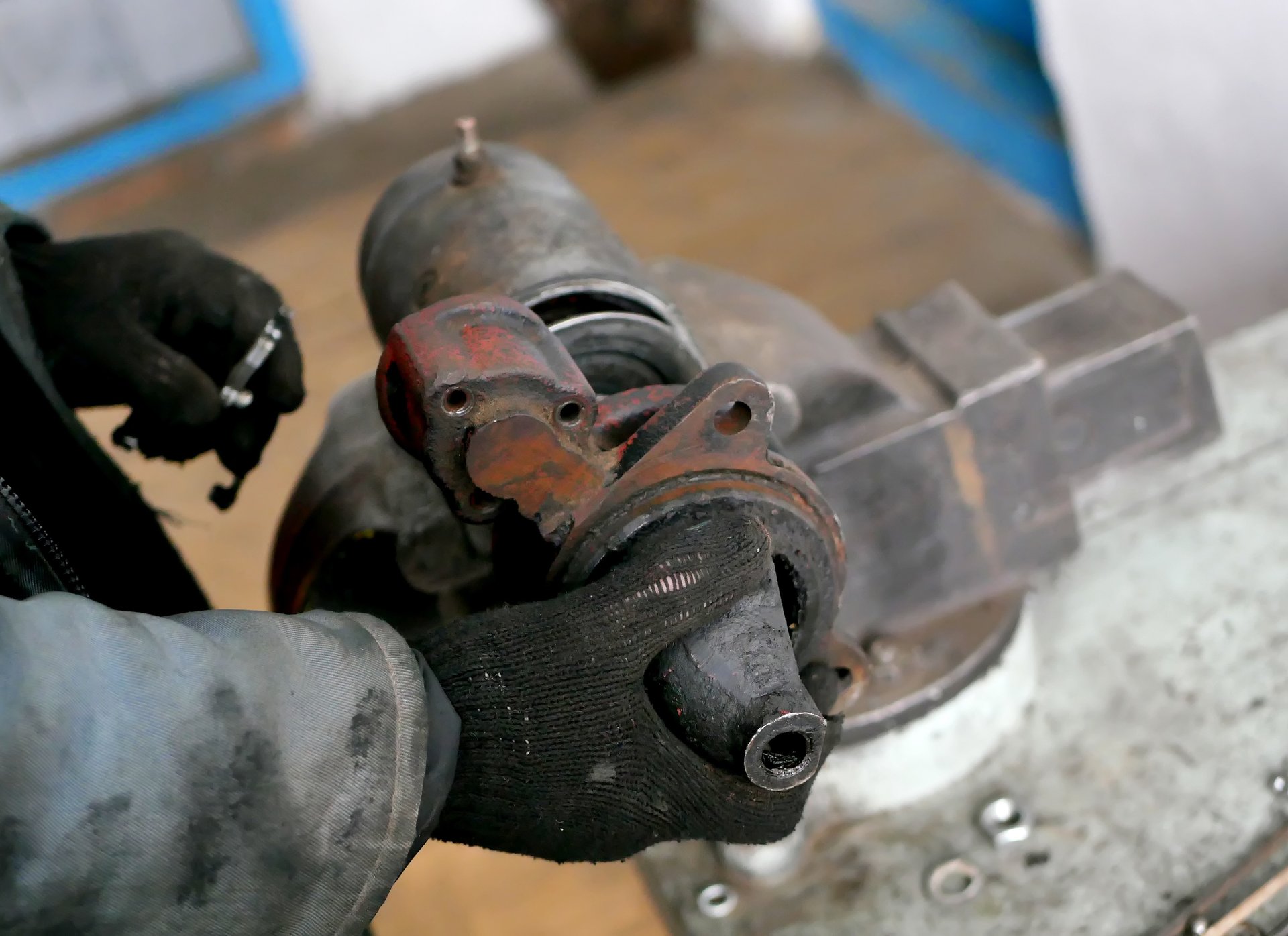
Starter
A starter motor is the DC motor that cranks an engine to life. How it works, the types on the market, the failure signs worth trusting, the specs to verify before buying, and what separates a dependable supplier from a cheap listing.
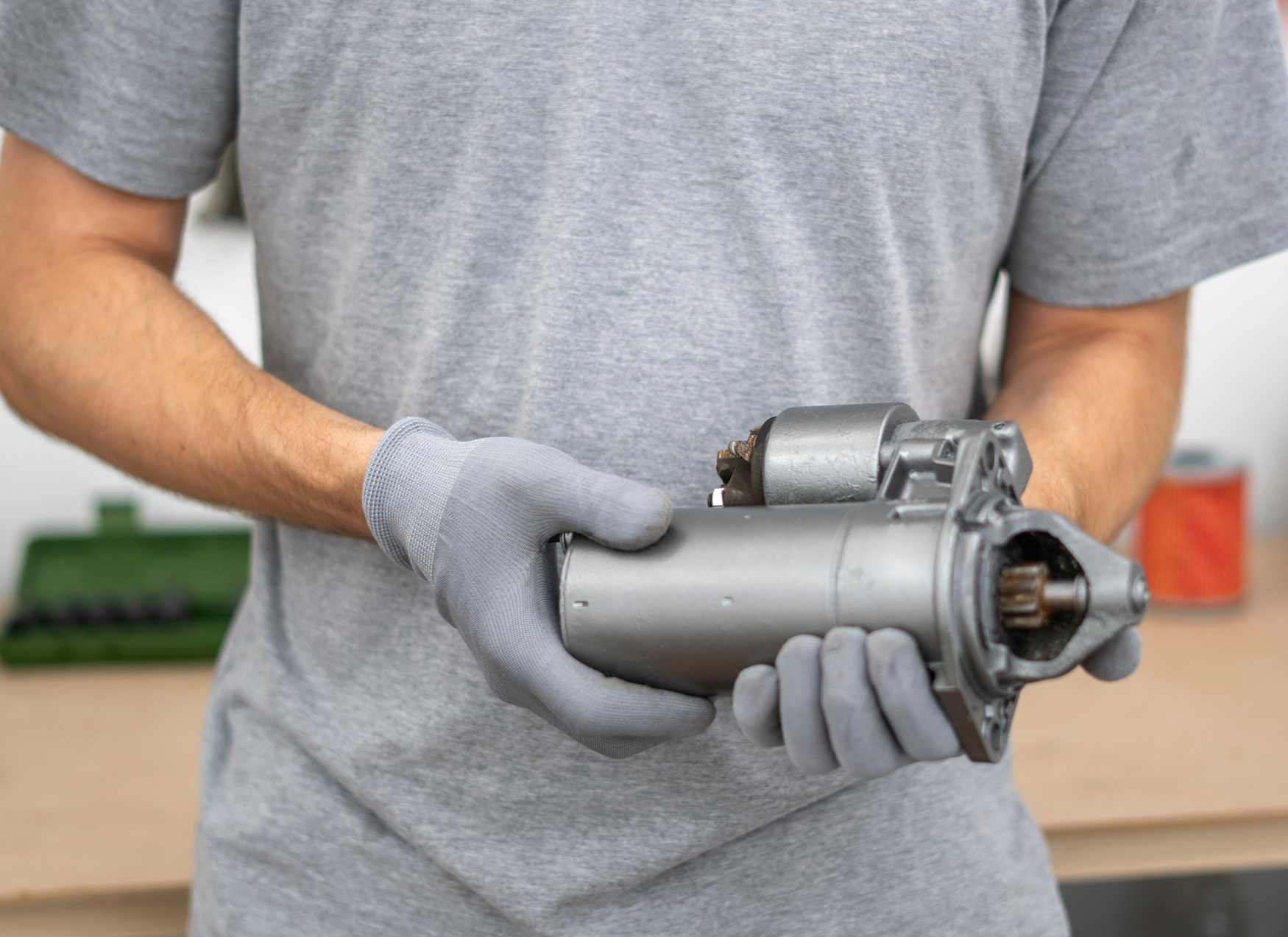
Starter
Bench testing measures a starter motor's voltage, current draw and rotation speed before installation. Readings outside 10-11V under load, 150-250A or 3,000-5,000 rpm reveal shorted windings, worn bearings, poor contacts or gear damage early.
Starter
A starter motor is the DC motor that cranks an engine to life. How it works, the types on the market, the failure signs worth trusting, the specs to verify before buying, and what separates a dependable supplier from a cheap listing.
Starter
Bench testing measures a starter motor's voltage, current draw and rotation speed before installation. Readings outside 10-11V under load, 150-250A or 3,000-5,000 rpm reveal shorted windings, worn bearings, poor contacts or gear damage early.