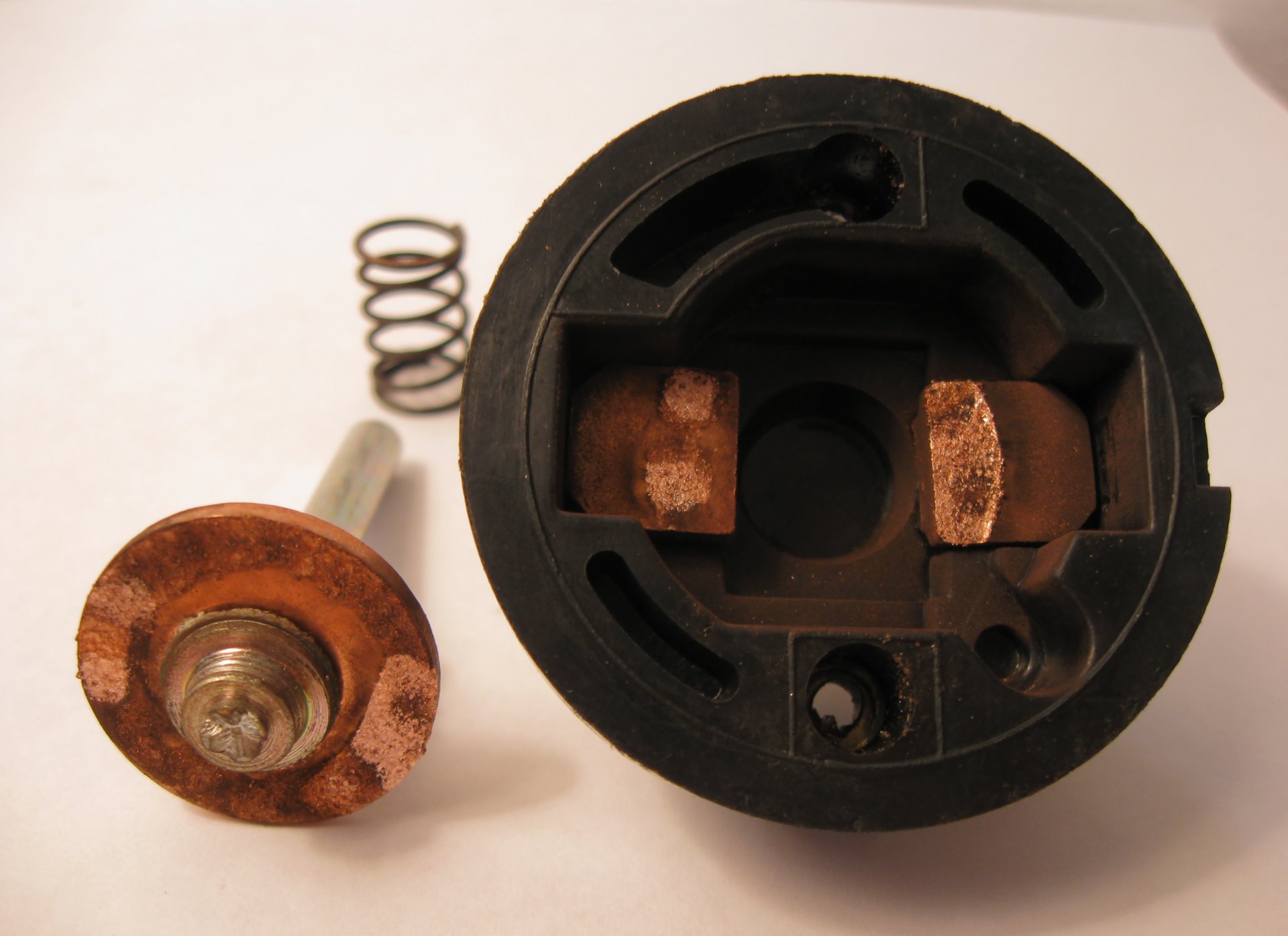

Rebuilders buy starter solenoids by the batch, not the piece. This guide covers what the rebuild bench needs from the part, the numbering systems behind cross-referencing, incoming inspection, and how batch consistency protects build quality.
Rebuilders buy starter solenoids by the batch, not the piece. This guide covers what the rebuild bench needs from the part, the numbering systems behind cross-referencing, incoming inspection, and how batch consistency protects build quality.
A starter rebuild shop lives on cores that arrive broken and leave whole. The motor housing, the armature, the drive, the field coils, each gets assessed, cleaned, replaced or reused, and the finished unit goes out with a warranty attached to work the shop did not fully control, because some of the parts inside came from someone else.
The solenoid sits at the center of that arrangement. On a large share of cores crossing a rebuild bench, the motor tests fine and the fault is the solenoid, which makes it one of the highest-turnover purchased parts in the shop. Buying it well is not a procurement afterthought. It decides how much of the build the shop can actually stand behind.
On the vehicle, a failed solenoid usually ends in a complete starter replacement. Labor carries most of that decision, since removing a starter, opening it up and rebuilding it in a service bay costs more shop time than swapping the assembly, and on many applications the standalone part is not on a local shelf anyway. Repair policy and warranty arrangements push the same way, because a shop that installs a full unit hands back one warranty instead of two.
None of that means the solenoid is sealed to the starter as a matter of design. On plenty of applications it can be replaced on its own. Once the starter is already off the vehicle, and the motor, the drive and the rest of the assembly check out as serviceable, replacing the solenoid alone is often the cheaper way back to a working unit.
The rebuild bench inverts the economics. During rebuilding, the core is dismantled and its components are assessed individually, so the solenoid becomes a component like any other, one that can be tested, and one whose replacement costs a fraction of the surrounding assembly.
That gap is the entire business case for standalone solenoid supply. A shop that replaces solenoids wholesale on every rebuilt unit spends more per build but carries a simpler warranty. A shop that tests and reuses them spends less and accepts a second failure mode in the field. Most rebuilders land somewhere in the middle, replacing on anything that shows contact wear or slow plunger return, and the purchasing volume follows from that policy, so it is worth knowing which policy your own numbers support before setting stocking levels.
A rebuilt starter goes back together against the original factory build. The solenoid has to drop into that build without adjustment, which pins down far more than the mounting pattern. Plunger length and stroke decide whether the drive engages at the right point. Terminal position and angle decide whether the housing closes without cable strain. A part that fits the bolt holes but not the motion is a bench rejection, and bench rejections are labor even when the part itself is free.
The choice between a contact and plunger kit and a complete solenoid follows from the core rather than from price. Where the coil and plunger inside the housing are still sound and the cap opens cleanly, a kit restores the unit for less. Where the coil itself is in doubt, or the cap is damaged, the complete unit is the only sound basis for a warranted build. Shops that handle high volumes of the same starter family often standardize on one path and buy accordingly.
One more requirement is easy to overlook. The bench test at the end of the rebuild line compares each finished unit against expected readings, and those expectations assume the replacement solenoid behaves like the last one. A part that is dimensionally identical but electrically different shifts the whole distribution of test results, and the shop either chases ghosts or quietly widens its acceptance band. Neither is a good outcome.
Cross-referencing in this trade runs on several numbering systems at once. The OE number ties a part to the vehicle manufacturer. Unit numbers tie it to the starter it was built into, which is the reference rebuilders actually work from, since the core on the bench is a starter, not a car. Lester numbers cover the same landscape from the rebuild industry side, with one difference that matters in practice. They usually identify a starter assembly or an application rather than a loose solenoid, so a Lester reference narrows the assembly, and the supplier catalogue carries it down from there to the solenoid that fits. Plenty of standalone solenoids have no one-to-one Lester number of their own. A parts listing that shows OE, unit and Lester references side by side is the supplier performing that translation, not evidence of three parallel numbers for the same loose part.
Supersession chains matter as much as the numbers themselves. A part replaced by a later revision still resolves to a current supply source, but the revision may not be identical in every dimension, and the differences worth knowing about are rarely the ones printed in the listing. The terminal layout is the classic case. Three-post and four-post units can share a body and a cross-reference family while doing different things with the extra post. On some older or remotely mounted solenoids that post feeds the ignition bypass, which is where the four-post convention largely comes from, but the same post count turns up on units wired for other functions entirely. What a terminal does belongs to the family, the markings on the housing and the wiring diagram for that application. It is not settled by counting studs, and a familiar-looking body proves nothing about interchange. A build that assumed one layout will not forgive the other.
The practical habit is to verify against the core, not the catalogue. The number on the old solenoid, checked on the bench against the dimensions, the stroke, the terminal functions and the electrical specification, settles fitment faster than any chain of references, and it catches the supersession surprises before they become a returned build.
A rebuild shop does not inspect every purchased solenoid the way a laboratory would, and it does not need to. What it needs is a sampling routine that catches a bad lot before the lot is half-built into finished units, because by then the cost of the problem includes disassembly labor and a frozen shipping schedule.
The routine does not have to be elaborate. A handful of units from each lot, checked for the dimensions the build depends on, plus an engagement test that confirms plunger travel and pull-in behavior, covers most of what goes wrong. Low-voltage behavior is where a generic procedure quietly stops being useful. The test voltage and the acceptance limits belong to that part number and come from the manufacturer's specification, and a figure carried over from another family measures the procedure rather than the part.
An engagement check with nothing on the main circuit also proves less than it appears to. A solenoid that snaps in cleanly with no load can still be the one that fails on the vehicle, because the contact face only shows its condition while it is carrying cranking current. A voltage drop measured across the main terminals under load is the reading that catches it, and hold-in current plus release behavior round out the picture, since a plunger that lets go late is a different defect from one that never pulls in. None of this needs a laboratory. It needs the same measurements taken the same way on every lot.
What elevates the routine from habit to control is the record around it, the lot identity, the readings, the date, which is where batch traceability earns its keep. When a field claim comes back on a rebuilt unit, the shop wants to know within minutes whether other builds carry the same solenoid lot.
Storage conditions belong to the same conversation, since solenoids that sit in stock for months are exposed to whatever the warehouse air does to plating and seals. A lot that passed incoming inspection in January and gets built in August is not the same part it was.
Batch consistency is the quiet variable in rebuild quality. When a supplier's production drifts, coil resistance creeps, pull-in behavior shifts, and the readings the bench compares against quietly move with them. The first symptom is rarely a failed build. It is a test bench operator saying the numbers look different lately, which is exactly the kind of observation that never survives into a report unless someone is listening for it.
This is where the teardown habit pays its second dividend. Shops that open their field returns and identify which component failed generate a running record of starter solenoid failure patterns, and that record tells a supplier conversation from a claim. A rise in contact failures traced to builds from one supplier's lots is information. The same failures spread evenly across every source is a different conversation about duty or application, and the rebuild data is often the only thing that can tell the two apart.
Supply stability rounds it out. A rebuild line tooled and documented around one starter platform runs on the assumption that the solenoid line behind it does not silently change. Dual-sourcing the same reference from two suppliers is a common hedge, and it holds up when both sources clear the same validation and each lot stays traceable to its origin, which puts the weight back on incoming inspection rather than on how many names stand behind the reference.
It depends on the starter family and the failure profile of the cores. Families with accessible caps and healthy windings, which includes many of the classic gear-reduction units, suit contact kits and keep per-build cost down. Families where the solenoid is harder to open, or where coil faults run high in the core stream, are cheaper to rebuild on complete units. The honest answer for any given shop is whatever its own teardown numbers say the cores are actually failing from.
Usually a starter assembly or an application, not one loose solenoid. The rebuild industry has used the system for decades to match units, so a Lester reference is a reliable way to narrow the assembly, and the supplier catalogue carries it down to the solenoid that fits. That also means not every standalone solenoid has a one-to-one Lester number, and the system does not encode every revision difference. Confirm against the old part number, the dimensions, the stroke, the terminal functions and the electrical specification before committing. It is one gate in the chain, not the last one.
There is no universal ratio, since it depends on how the shop splits repair versus replacement, and on the failure profile of the core stream it buys. The workable approach is to track solenoid consumption per core family for a few months and stock against that measured rate, with extra depth on the families where core quality is inconsistent. Suppliers who quote a fixed industry ratio are guessing at your mix.
Whether mixing two supply sources works depends on two conditions holding at once. Both sources have to have passed the same validation, so that a build never depends on which supplier's part happened to be in the bin. And every finished unit has to be traceable to the supplier and the incoming lot behind it, so a field claim resolves to a source instead of to a shrug. Where those two hold, mixing is workable. Where they do not, the mix removes exactly the information a warranty claim depends on.
Running the sources in separate build lots simplifies the administration and is a common way to keep it manageable, but it is one sound method rather than the only reliable one. A shared brand name on the label does not substitute for either condition, since consistency comes from validation and traceability rather than from the name on the box.
When the rebuild includes proper testing of the rest of the assembly, yes, and the new solenoid is often the strongest component in the finished unit. The caveat is the word proper, since a rebuilt starter that only swapped the solenoid and skipped the motor and drive checks inherits every other worn part. Buy the rebuild reputation, not the parts list.