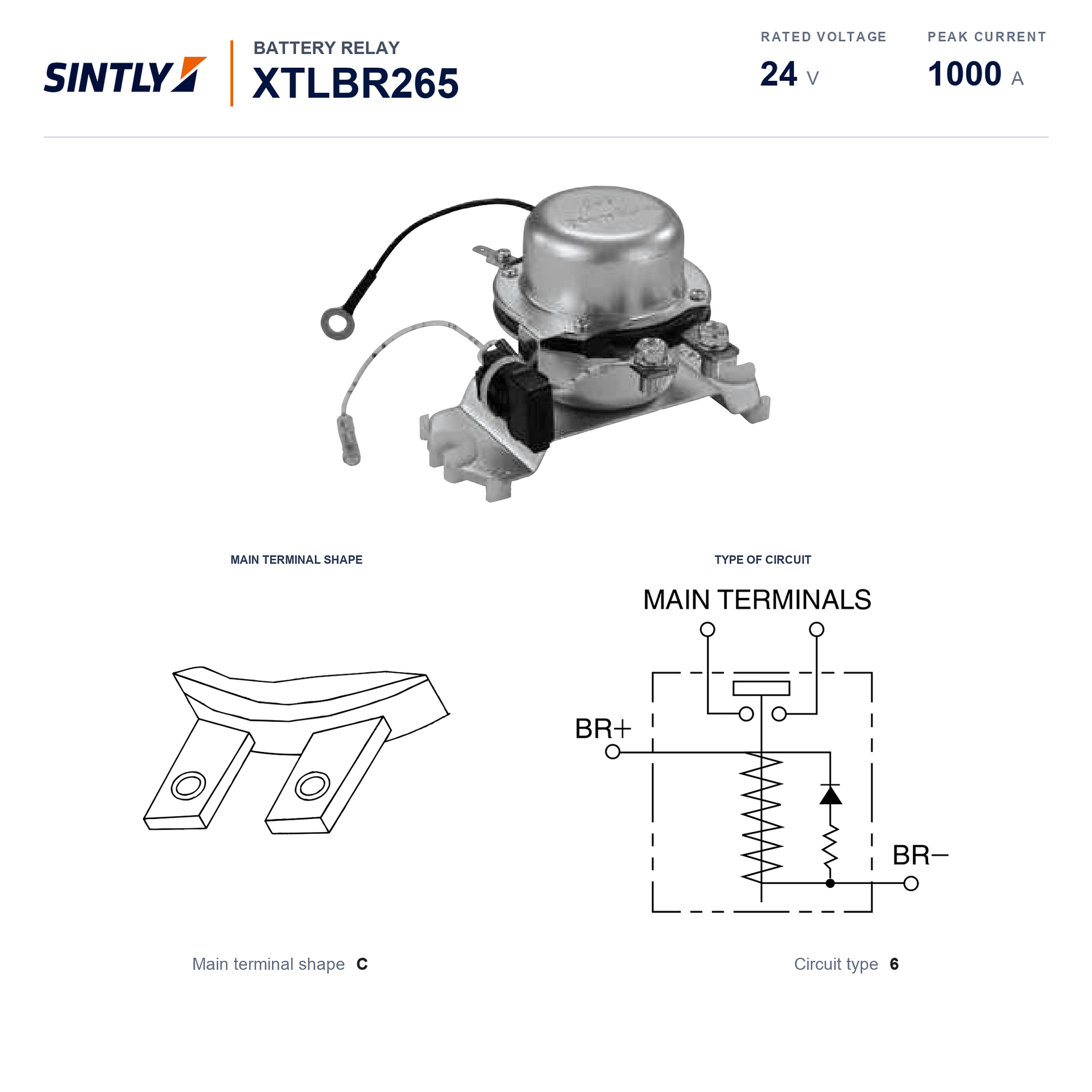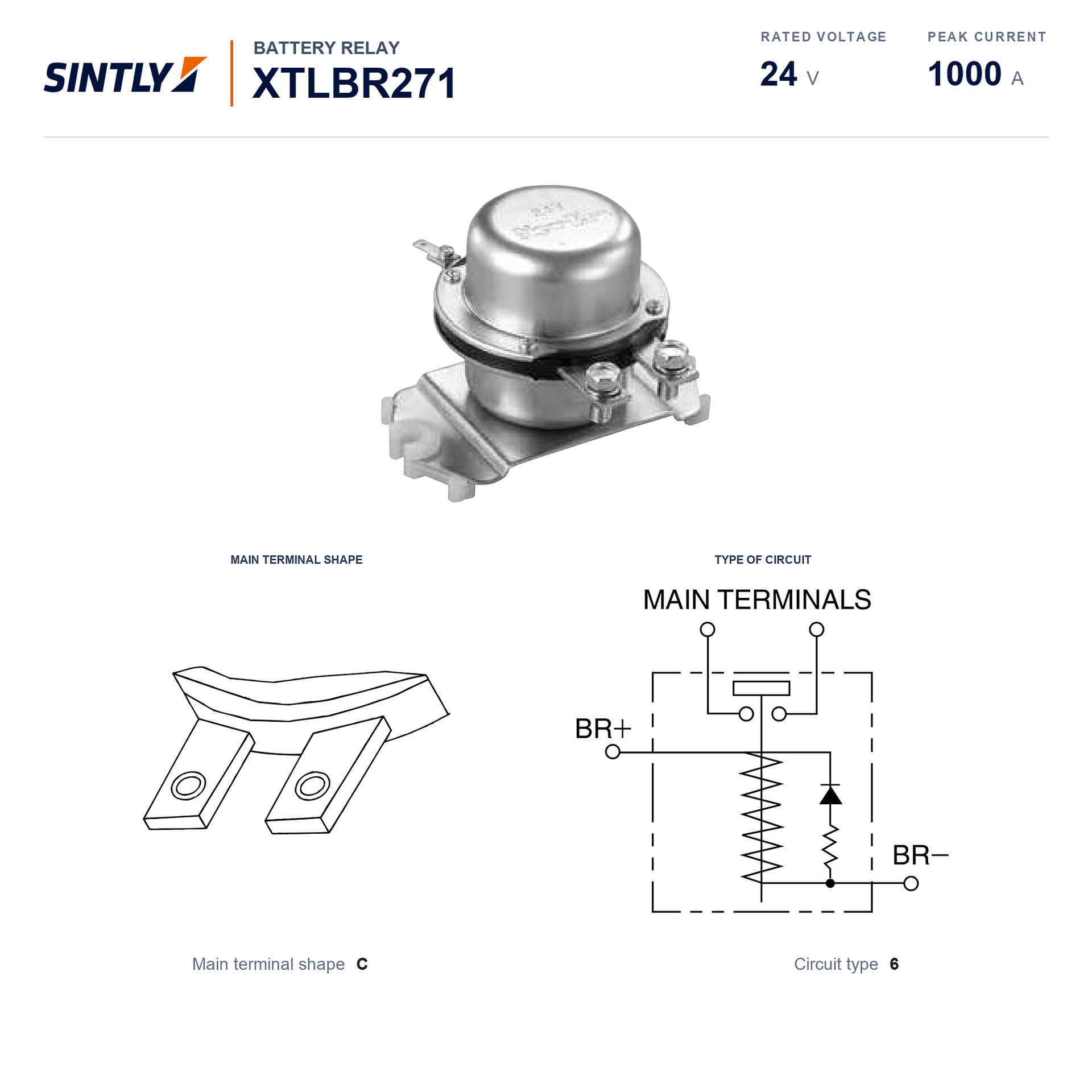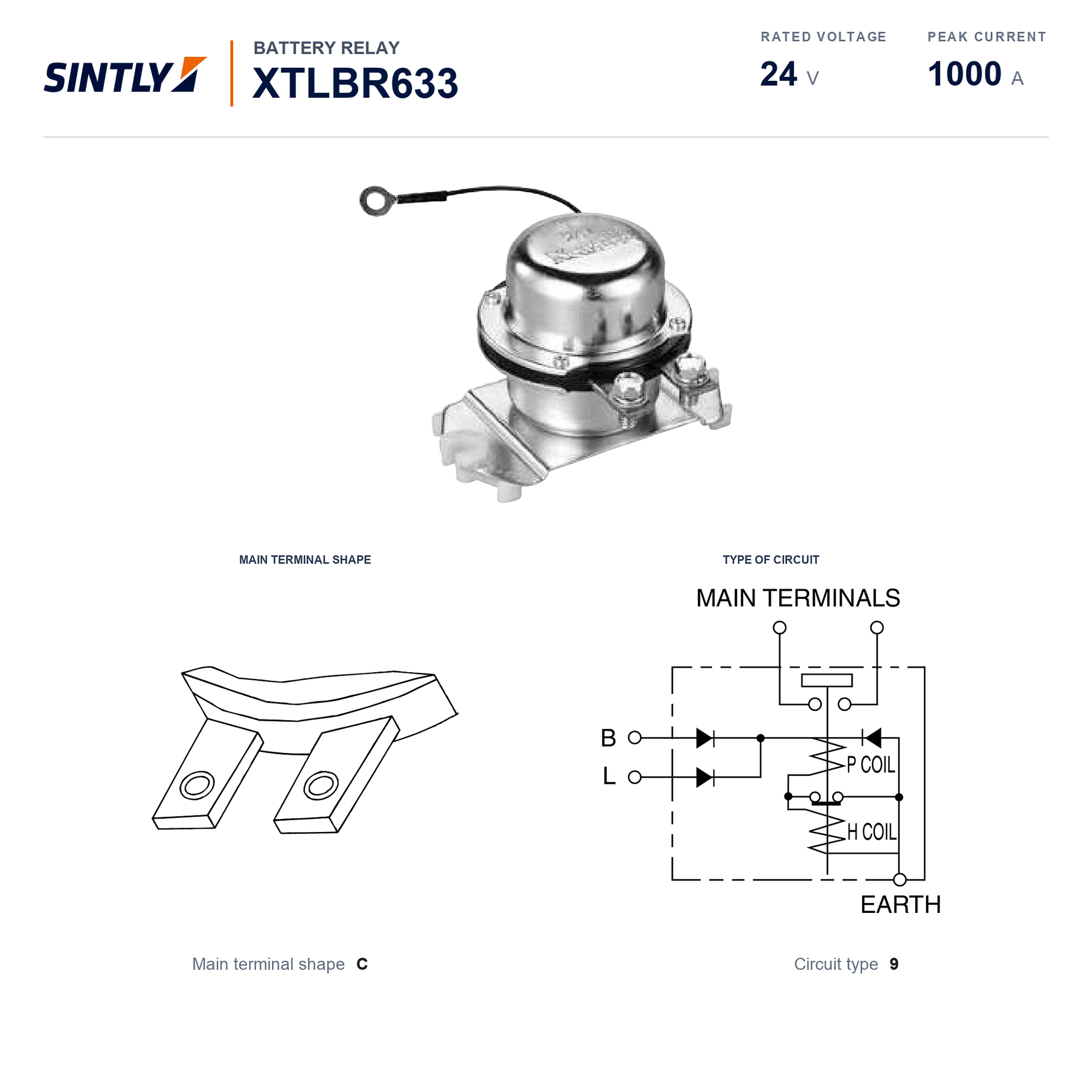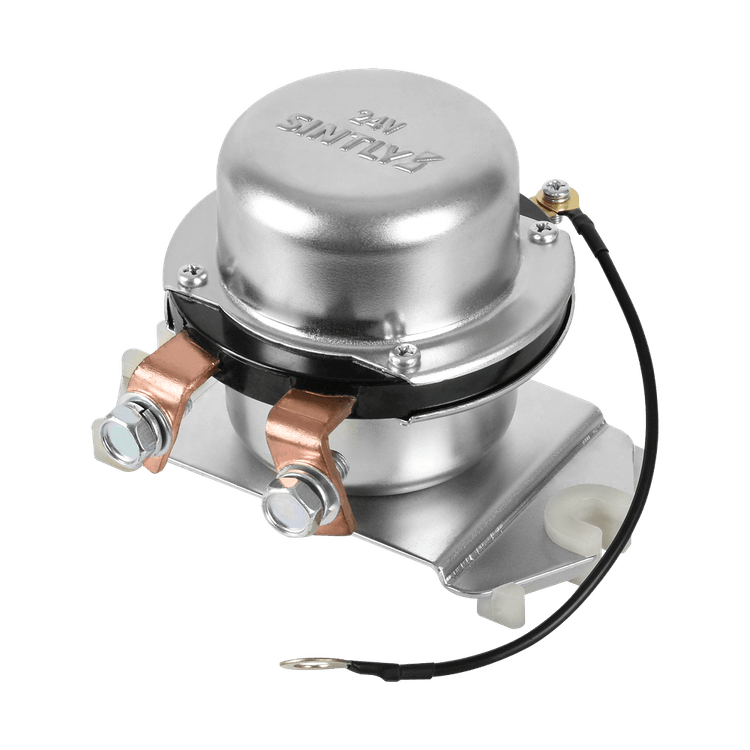


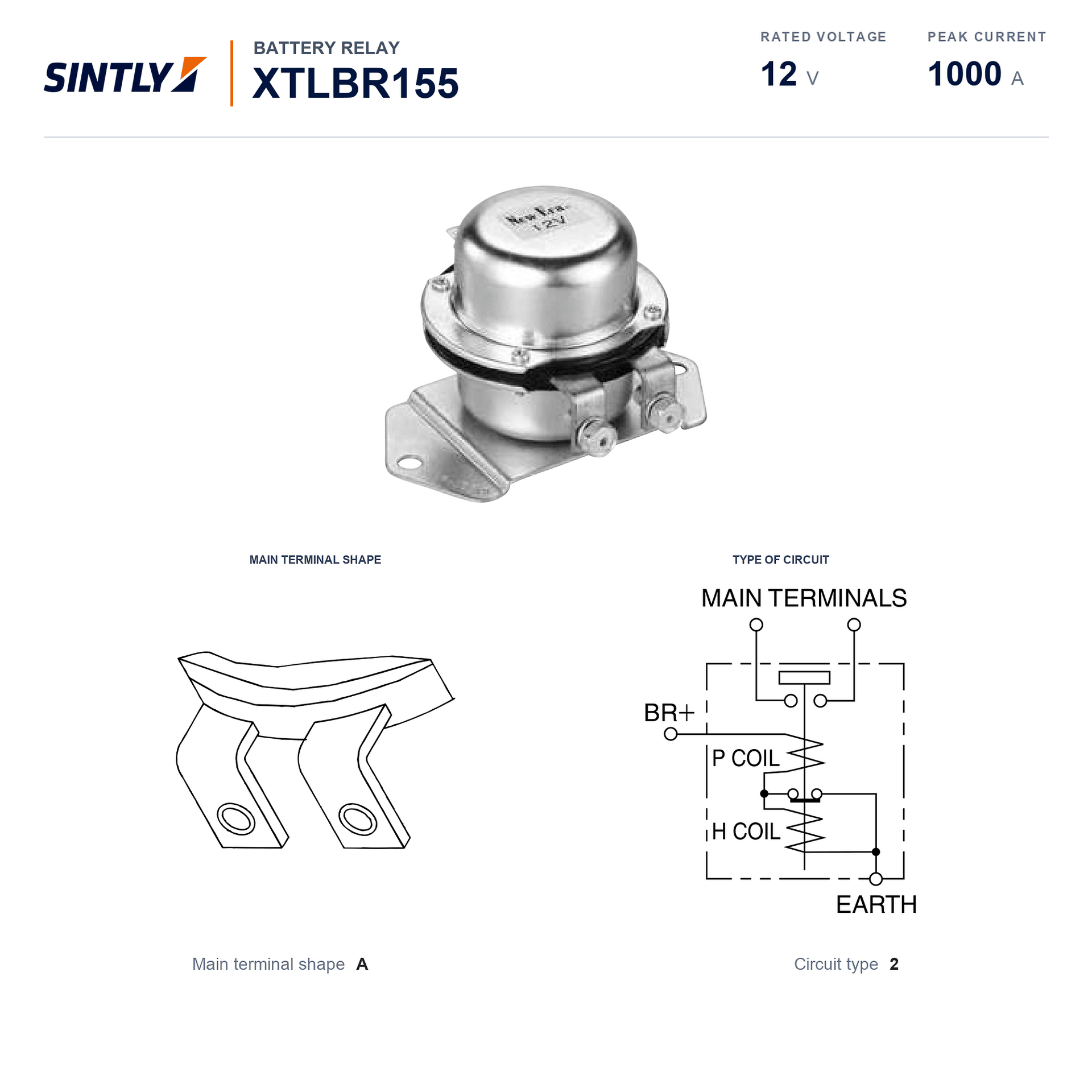
Battery Relay XTLBR155
- Rated Starting Voltage
- 12 V
- Continuous Current
- 40 A
- Disconnect Type
- Positive Cut
- Circuit Type
- 2

Review battery relays with clear specifications and detailed product views. Compare terminal configurations, housing designs, and mounting options as you prepare your next order.

Browse the models below, compare electrical specifications, terminal layouts, and mounting details, and select the options that meet your sourcing requirements.
Find answers to common questions about Battery Relay, including product selection, specifications, installation, and maintenance.
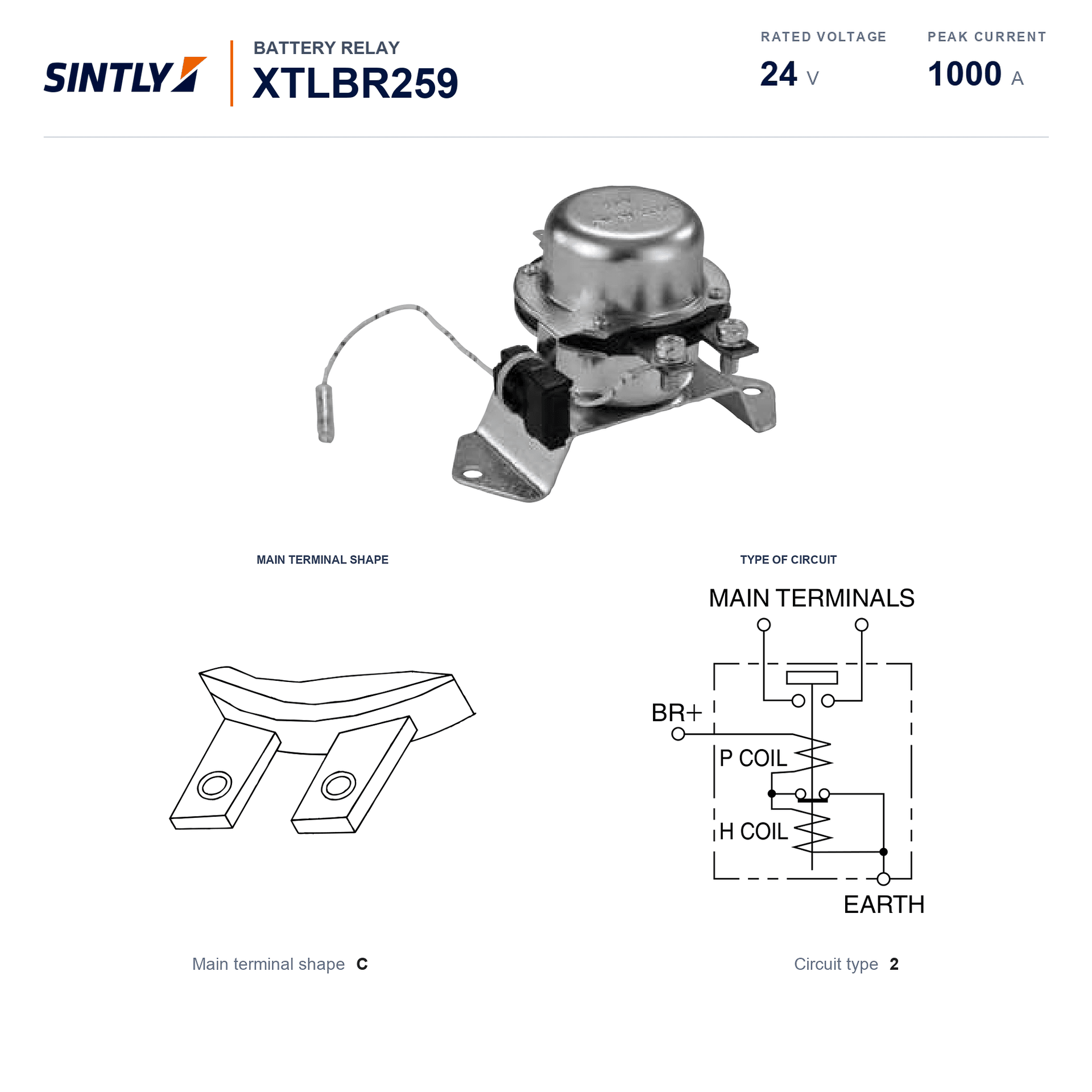
Matching ratings alone are not enough. For example, XTLBR253 and XTLBR257 both list 24V Rated Starting Voltage, 28V Rated Charging Voltage and 120A Continuous Current, but XTLBR253 is Negative Cut with Circuit Type 1, while XTLBR257 is Positive Cut with Circuit Type 3. Match the disconnect arrangement, wiring and original reference before consolidating purchase items.
The catalogue specifies Peak Current (0.1 s), so the 1000A value should not be treated as a continuous-current rating or approval for a longer starting event. For example, XTLBR262 lists 35A Continuous Current despite its 1000A peak rating. Provide your sustained load and starting-current duration so suitability can be confirmed against the required operating conditions.
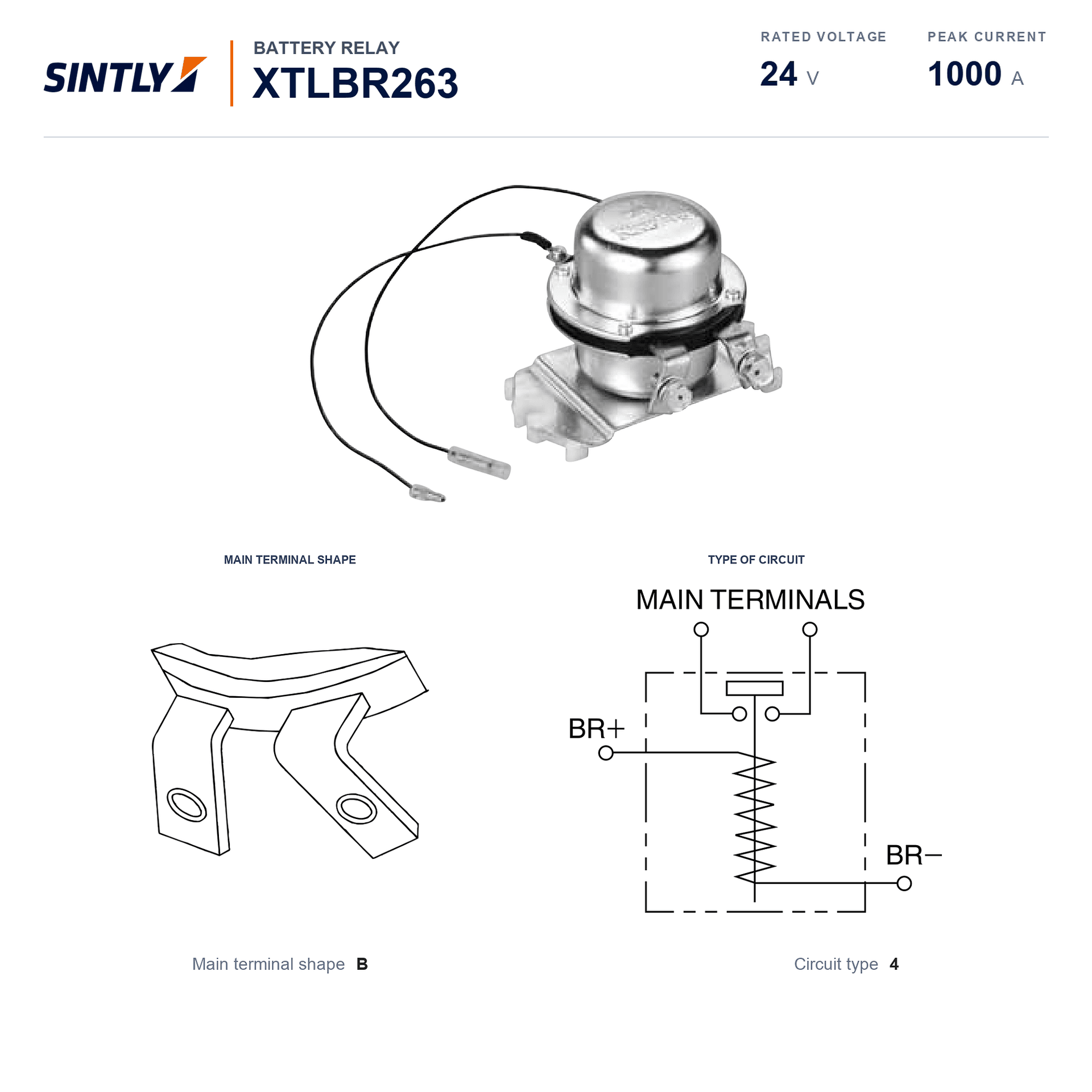
Confirm the coil connections and return path from the wiring diagram before approving the change. XTLBR262 and XTLBR263 share the displayed voltage, current, disconnect type and Circuit Type 4, but their Coil Terminal Lead Count differs: one versus two. They also list different references—8255-0008 and 8255-0009 respectively. Similar main specifications do not establish the same control wiring.
Use these codes to narrow the catalogue selection, then request the corresponding wiring diagram and dimensional drawing. For example, XTLBR257 lists Circuit Type 3 and Main Terminal Shape A, but those codes alone do not define the control-terminal functions, terminal dimensions or mounting clearances. Confirm those details against your original relay before approving the replacement.
No Tooling Cost on Standard Specs
Existing part numbers carry no mold or tooling charge.
First Article Inspection
New part numbers get a full first-article check before the run starts.
Discover practical articles on battery relay selection, common switching issues, and replacement considerations. Find useful guidance to support product sourcing, inspection, and maintenance.

Battery Relay
Battery relays in heavy-duty use fail more from misread ratings than bad manufacturing. This article covers duty ratings, temperature derating, cycle life, smart alternator compatibility and sourcing checks for wholesale buyers.

Battery Relay
Battery disconnect relays isolate a vehicle or machine battery electrically instead of manually. This article compares monostable and latching control types, load sizing, fail-safe logic and application matching for wholesale and fleet buyers.
Battery Relay
You can get the knowledge of the battery relay in this article.