
Learn how to evaluate an automotive aftermarket parts supplier before placing a bulk order, including quality, samples, production capacity, lead time, traceability, warranty, and after-sales support.
Learn how to evaluate an automotive aftermarket parts supplier before placing a bulk order, including quality, samples, production capacity, lead time, traceability, warranty, and after-sales support.
Choosing an automotive aftermarket parts supplier for the first time involves more than comparing prices. Buyers should evaluate product coverage, factory capability, sample quality, testing, production consistency, lead time, packaging, traceability, and after-sales support before placing a bulk order.
Start by checking whether the supplier can support the products and applications your market actually needs.
A supplier may have a large catalogue, but product quantity alone does not indicate whether the supplier is suitable for your business. Look for clear information about:
Cross-reference information is particularly important in the automotive aftermarket because distributors and online sellers may receive orders based on different OE or aftermarket numbers for the same application.
For example, SINTLY's current starter product range covers starter solenoids, battery relays, starter relays, starters, alternators, oil filter housings, and bed steps, with extensive OE and cross-reference coverage.
The goal is to determine whether the supplier can support your current product needs and potentially reduce the number of suppliers you need to manage.
A supplier's website can tell you what it sells, but buyers should also understand how the products are actually produced.
Before a first bulk order, ask:
This matters because your first order may be small compared with future orders.
A supplier that can produce a sample successfully but cannot maintain production capacity during larger orders may create delays when your business grows.
SINTLY states that its manufacturing operations include tooling, assembly, testing, production planning, warehouse management, and order fulfillment, supporting global B2B aftermarket customers.
A sample should be treated as the reference point for the bulk order.
Do not approve a product only because the photograph looks similar to the original part.
Depending on the product, compare:
| What to Check | Why It Matters |
|---|---|
| Dimensions | Confirms physical fitment |
| Mounting points | Prevents installation problems |
| Connectors and terminals | Ensures correct electrical connection |
| Voltage | Must match the application |
| Electrical performance | Helps verify functional reliability |
| Materials and construction | Affects durability |
| OE/reference numbers | Helps confirm application |
| Packaging and labeling | Important for distribution |
If possible, compare the supplier's sample with an original or approved reference part.
For electrical components, functional testing should also be performed before approval. SINTLY's guide to bench testing a starter motor provides a practical example of how voltage, current draw, and rotation speed can be measured before installation.

A supplier should be able to explain how quality is controlled throughout production.
A typical process may include:
Incoming Materials → Component Inspection → Assembly → Electrical Testing → Performance Testing → Final Inspection → Packaging → Shipment
The important question is not simply whether the supplier says it has "strict quality control."
Ask what is actually inspected and recorded.
Useful questions include:
For B2B buyers, this information can be more valuable than a general quality statement because it shows how the supplier manages consistency.
SINTLY states that its quality systems are certified to ISO 9001 and IATF 16949:2016 and that its laboratory testing covers electrical performance, mechanical function, durability, fitment stability, and batch consistency.
Passing the first sample is only the beginning.
The more important question is whether the supplier can reproduce the same approved product over hundreds or thousands of units.
Ask whether products can be traced by:
Traceability becomes especially important when a distributor receives a warranty complaint.
If several customers report the same problem, the supplier should be able to determine whether the issue is isolated or connected to a particular production batch.
Good traceability helps both sides identify problems faster and prevent unnecessary disruption to inventory.
Price is important, but it should not be evaluated separately from supply conditions.
Before ordering, clarify:
A supplier offering a lower unit price may not necessarily reduce your total purchasing cost if production delays cause stock shortages.
For distributors and online auto parts sellers, stable replenishment can be especially important because unavailable products can result in lost sales and customer complaints.
It is therefore useful to ask the supplier how it handles both the first order and subsequent repeat orders.
Automotive parts may travel long distances before reaching the final customer.
Packaging should therefore be evaluated as part of the purchasing process.
Check whether the supplier provides:
For electrical components, damaged terminals, moisture exposure, or movement inside the carton can create problems even when the product passed factory inspection.
Before a large shipment, buyers should confirm packaging specifications and, when necessary, request packaging samples.
Warranty terms should be discussed before the purchase order, not after a problem occurs.
Confirm:
A good supplier relationship also requires technical communication.
When a customer reports a defective part, the supplier should be able to help determine whether the problem comes from the part itself, installation, wiring, another component, or an incorrect application. For example, SINTLY's starter solenoid quality control guide explains how sample approval, testing, batch traceability, and corrective action can support quality management for bulk orders.

Before placing your first bulk order, use this checklist:
| Evaluation Area | Questions to Ask |
|---|---|
| Product Range | Does the supplier cover the applications you need? |
| Specifications | Are complete technical specifications available? |
| Cross-References | Are OE and aftermarket numbers clearly documented? |
| Factory | Does the supplier have real production capability? |
| Sample | Can you test and approve samples first? |
| Quality Control | What inspections and tests are performed? |
| Consistency | Can the approved sample be reproduced consistently? |
| Traceability | Can production batches be tracked? |
| MOQ & Lead Time | Can the supplier support your purchasing plan? |
| Packaging | Is the product adequately protected during shipping? |
| Warranty | Are claim and replacement procedures clearly defined? |
| Support | Can the supplier provide technical and after-sales assistance? |
Several purchasing mistakes can create problems later.
Choosing based only on price.
A low unit price does not necessarily mean a lower total purchasing cost.
Skipping sample approval.
A product should be evaluated before committing to a large quantity.
Relying only on OE numbers.
OE references are useful, but physical and technical specifications should also be confirmed.
Ignoring production consistency.
A good first batch does not automatically guarantee consistent future production.
Not defining warranty terms.
Unclear claim procedures can create disputes after delivery.
Not checking packaging.
Products can be damaged during transportation even when factory quality is acceptable.
Evaluating an automotive aftermarket parts supplier before the first bulk order is ultimately about reducing sourcing risk.
Buyers should look beyond catalogue size and unit price. Product coverage, factory capability, sample approval, testing, quality control, production consistency, traceability, lead time, packaging, warranty, and technical support all contribute to a reliable B2B supply relationship.
A supplier should be evaluated not only on what it can deliver today, but also on whether it can consistently deliver the same approved quality as your business grows.
Starter Solenoid
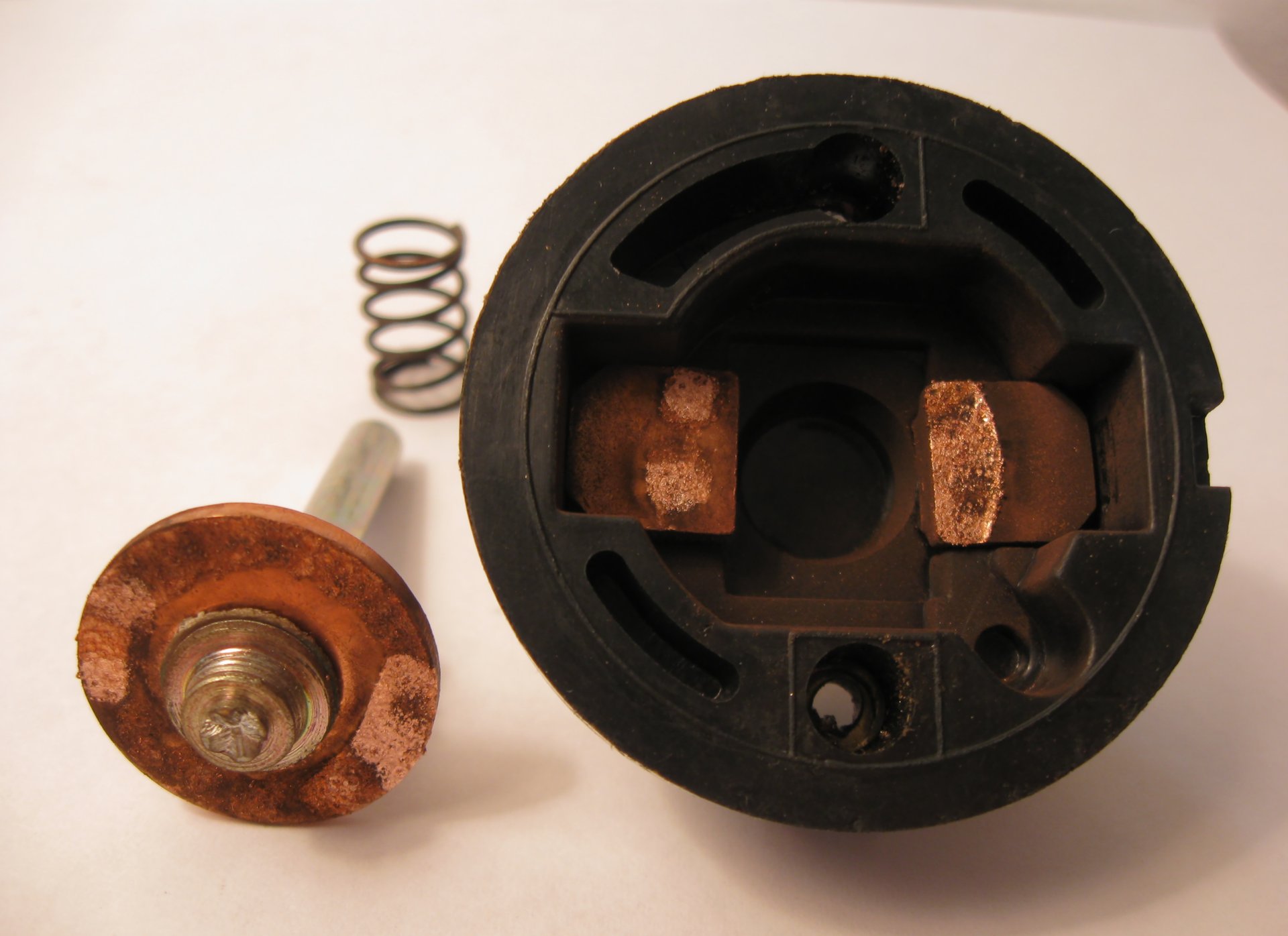
Starter solenoid failures follow recognizable patterns. This guide separates failure modes from operating causes, from contact erosion and coil burnout to low-voltage chatter and corrosion, and shows buyers how to read the evidence in returns.

Battery Relay
Battery relays in heavy-duty use fail more from misread ratings than bad manufacturing. This article covers duty ratings, temperature derating, cycle life, smart alternator compatibility and sourcing checks for wholesale buyers.
Starter Solenoid
Starter solenoid failures follow recognizable patterns. This guide separates failure modes from operating causes, from contact erosion and coil burnout to low-voltage chatter and corrosion, and shows buyers how to read the evidence in returns.
Battery Relay
Battery relays in heavy-duty use fail more from misread ratings than bad manufacturing. This article covers duty ratings, temperature derating, cycle life, smart alternator compatibility and sourcing checks for wholesale buyers.