
A starter motor fails along a handful of well-understood paths, and each path points at how the part was made or how it was used. Brush wear, winding burnout, drive faults, and solenoid failures each leave evidence a buyer can read in returned units.
A starter motor fails along a handful of well-understood paths, and each path points at how the part was made or how it was used. Brush wear, winding burnout, drive faults, and solenoid failures each leave evidence a buyer can read in returned units.
A starter motor has one of the hardest short jobs on a vehicle. Each start it pulls several hundred amperes from the battery, converts that into enough torque to spin a cold engine, and then stops. The event lasts seconds, and the part repeats it tens of thousands of times through heat, vibration, and road spray, still responding the first time a key turns on a cold morning.
A starter failure rarely happens at random. It usually follows one of a small set of predictable paths, and which path it takes says a lot about how the part was made and how it was used. For a buyer sourcing these units by the pallet, reading those paths turns a returned part from a warranty cost into information.
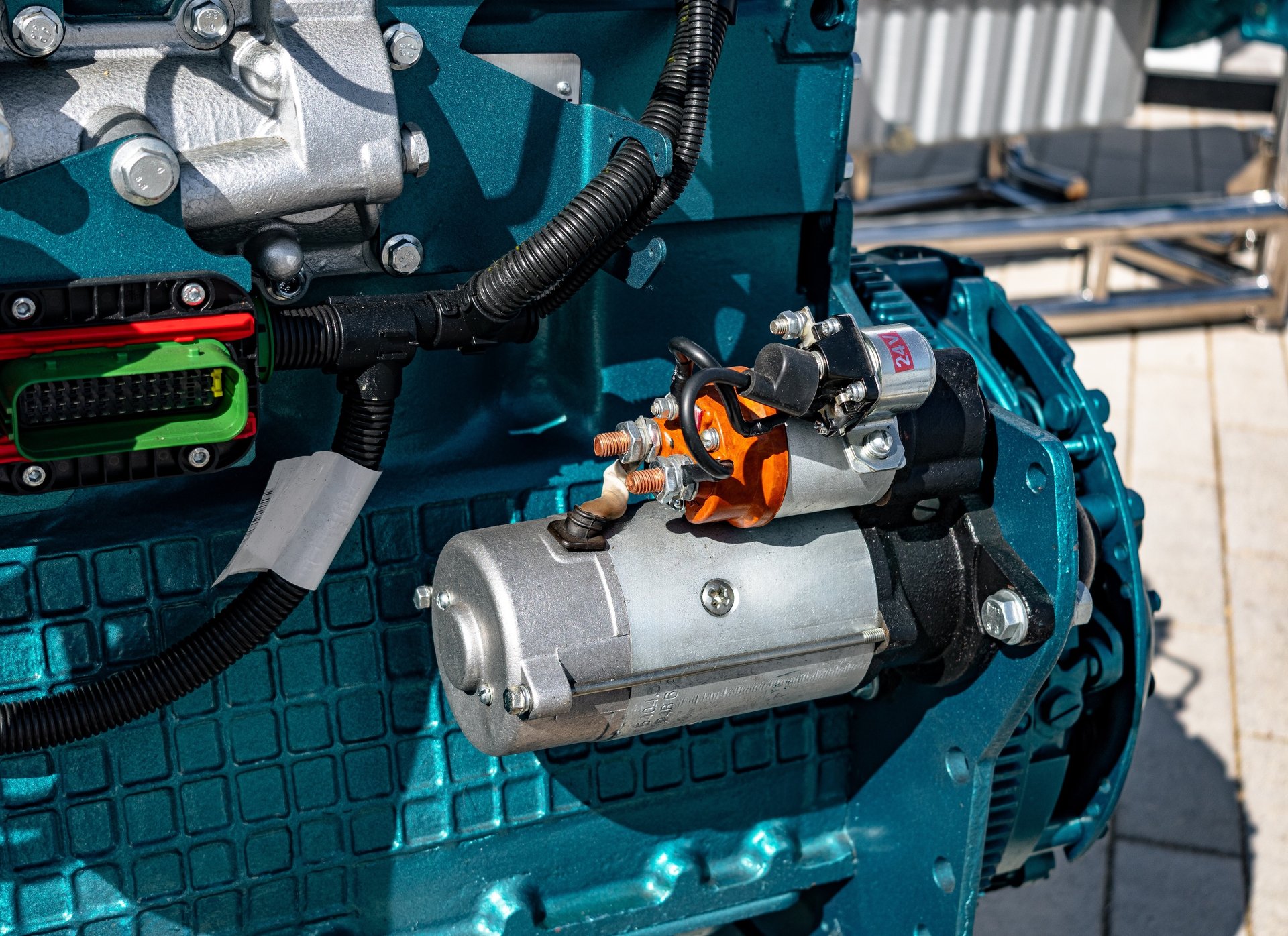
A starter motor packs several aging parts into one housing. The brushes and commutator carry the full cranking current through a sliding contact. The armature windings do the actual work of converting current into rotation. The drive mechanism reaches out to the engine and releases when it catches. The solenoid, on most modern units, switches the main current and shifts the drive.
Each of these has its own failure pattern, and the patterns below are not a menu of mutually exclusive faults. Several can be present in one failed unit, and a single condition such as low voltage can push more than one of them at the same time. Bushings and bearings wear and add drag. Moisture can corrode internal surfaces, while oil contamination can affect the brushes, worsen wear, and mix with brush dust into a contaminant that creates contact or shorting problems. Any of these can speed several of the failure paths above at once. Treat them as things to look for, not as separate verdicts.
The brushes ride against the commutator to feed current into the spinning armature, and that sliding contact is a wear item by design. Over thousands of starts the brushes shorten, the commutator surface darkens and grooves, and the contact area that actually carries current shrinks. A motor that cranks slower than it used to, or that spins weakly on a cold morning and normally after a few attempts, often points here.
Brush wear by itself is not a defect, and it is not always the motor's fault. A weak battery may simply leave the supply voltage short of what the motor needs during cranking. A corroded or loose connection adds resistance of its own, which creates an extra voltage drop and heats the joint locally. Either way the cranking that follows is slower and longer, so the motor runs hotter and brush life shortens even on a well-made unit. Extended cranking on a hard start does the same. The question a buyer should ask is not whether the brushes wore out, but whether they wore out in line with the duty the unit actually saw. A batch that returns with brushes worn to the holders after a fraction of the expected service points to brush grade, spring pressure, or commutator finish. The same wear after hard fleet duty points elsewhere.
The armature windings turn current into rotation, and their insulation is the part most sensitive to heat. When a starter is cranked past its duty, held on a hard start, or cycled repeatedly without rest, the winding temperature climbs until the varnish and wire insulation break down. Turns short together, the current draw rises, and the starter loses torque or stops responding altogether.
This is where over-cranking and a poor power supply do their damage. A control circuit that never releases the starter, or a driver who holds the key on a flooded or hard-starting engine, keeps current flowing far longer than the design expects. From the outside the result looks the same as a winding that was made badly: a motor that draws too much current and turns too slowly, or one that does not turn at all. Teardown evidence, a burnt smell, discolored varnish, blued wire, shows the heat was real. Whether the heat came from the winding or the application is a separate question that the batch record and the vehicle history have to answer.
A bench test on a suspect unit measures current draw and rotation directly. Readings outside the model's specification point to an abnormal unit and guide the next check, but current and speed alone do not confirm a shorted winding; they narrow where to look before the part goes back on a shelf or a vehicle.
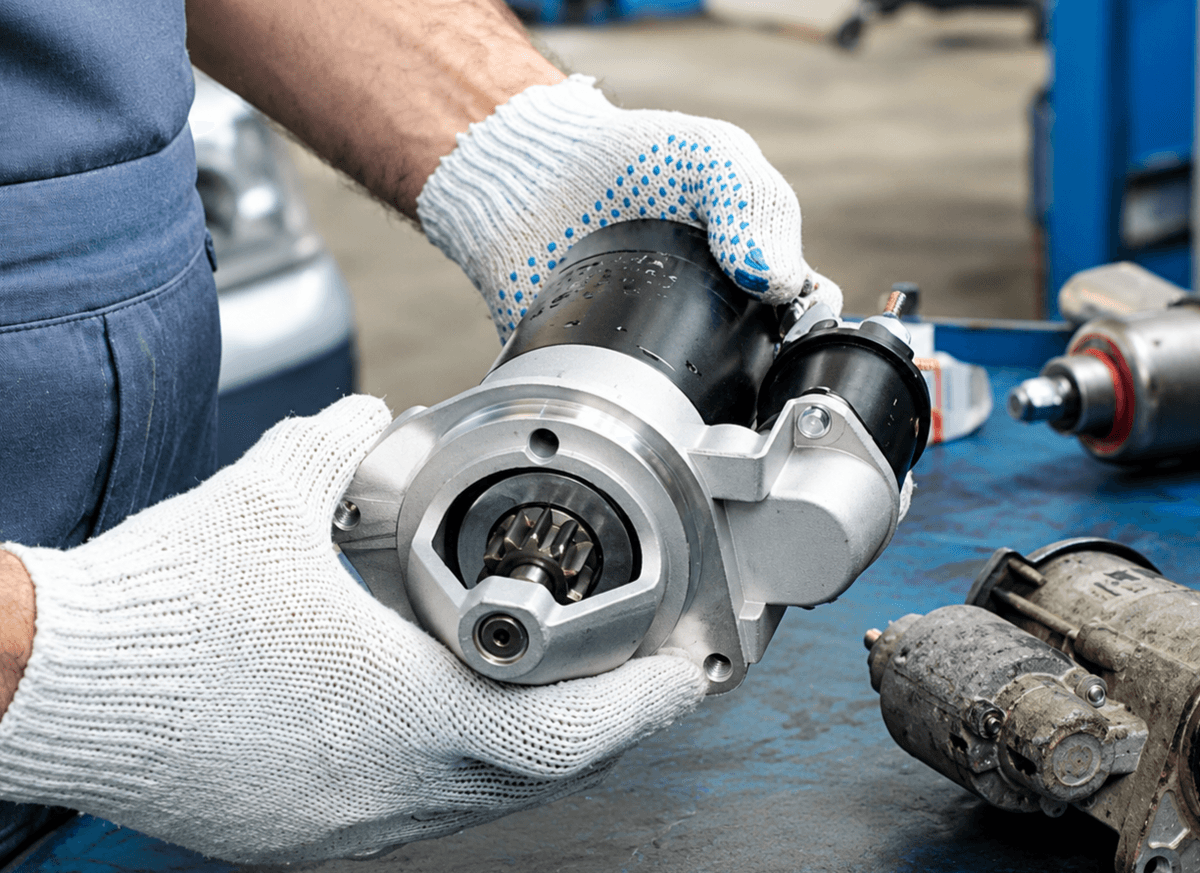
The drive is the part that reaches the engine. On most designs a solenoid pushes a pinion forward to mesh with the flywheel ring gear, and an overrunning clutch lets the pinion spin free once the engine fires. When the drive fails, the motor itself can still be healthy, which is exactly why this failure confuses people.
A pinion that engages late shows up as a grinding sound at the key. A clutch that slips in the driving direction lets the motor spin without turning the engine, which a driver hears as a whir with no crank. A clutch that no longer freewheels in the overrunning direction is a different fault: once the engine fires, with the pinion still meshed and the clutch unable to overrun properly, the engine can back-drive the starter into an overspeed condition that damages the motor. A worn ring gear on the flywheel produces the same grinding and damages the pinion in the process. None of these proves the starter motor itself is bad, and replacing the motor alone will not fix a damaged ring gear. The useful distinction for a buyer is which side of the mesh wore first, because it decides whether the return is a part problem or an installation and engine problem.
On most modern starters the solenoid is bolted to the motor, so a starter that fails to crank is often a solenoid failure rather than a fault in the motor itself. The solenoid switches the main current and moves the drive, and its own failure modes, burned contacts, a sticking plunger, a coil that has opened, produce the same no-crank or single-click symptom as a dead motor.
Before condemning the motor, the solenoid gets checked, along with the battery and the main connections, because all three can imitate each other. The point for a volume buyer is that a returned starter with a good motor and a failed solenoid is a different problem from one with a burned winding, and it should route to a different corrective action.
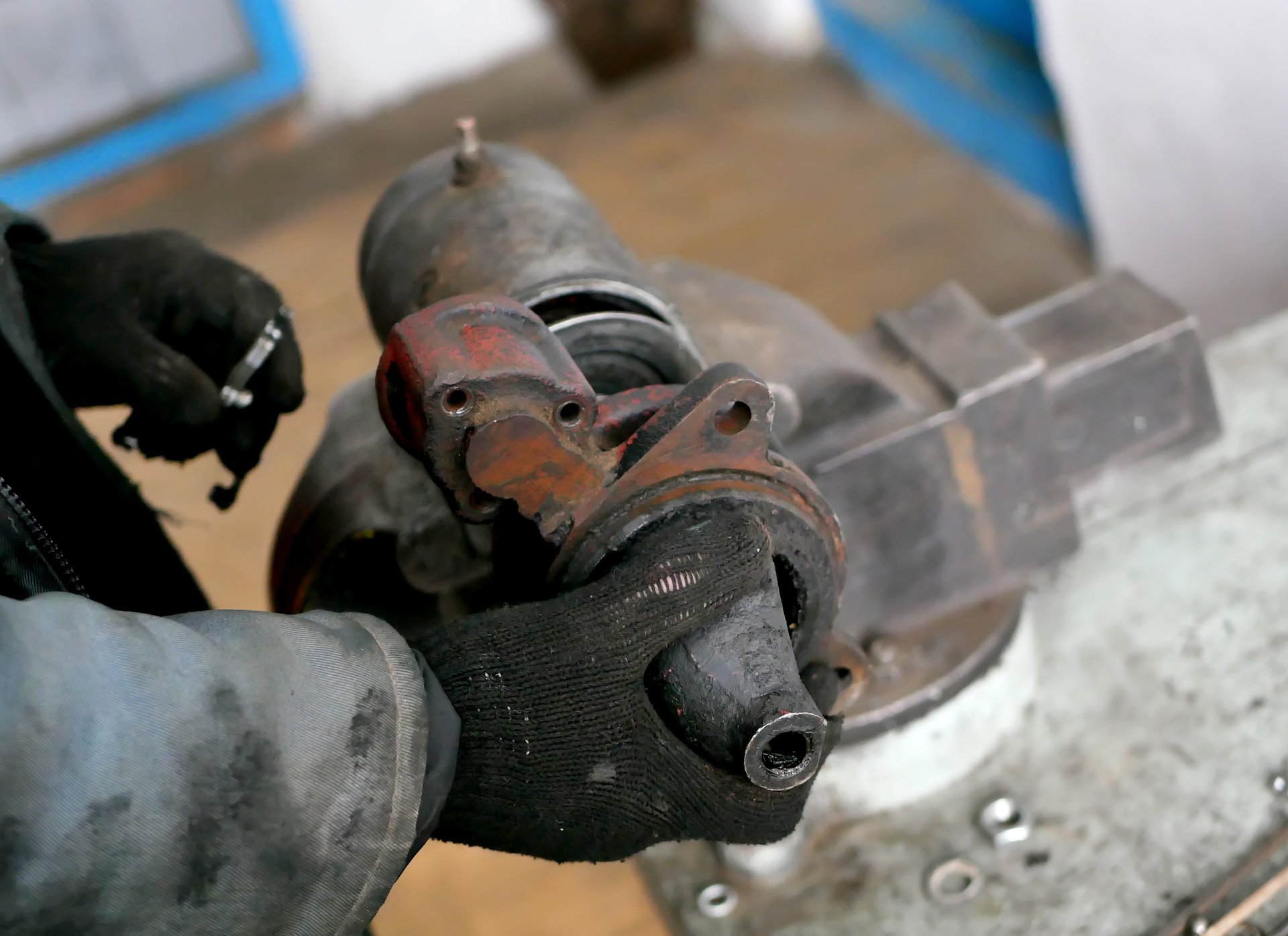
A teardown does not assign blame by itself. Brush wear can come from material, spring pressure, duty, or a weak power supply. Winding damage can come from insulation quality or from over-cranking. Drive wear can come from the pinion or from a damaged ring gear. What turns a teardown from a lead into a conclusion is the context around it, and a short return record provides that context.
Record the SKU or OE number, the batch, the application, how the unit was used, the symptom reported, a voltage or voltage-drop reading, and teardown photos. Batch and application patterns are leads to follow, not rules that settle blame on their own. A fault clustered in one batch across different applications points toward the batch; the same fault spread across one application points toward the application. Suppliers respond differently to a claim framed that way than to a pallet of parts with a complaint attached.
Do starter motors fail suddenly or gradually?
Many fail gradually in physical terms, since brush wear and insulation aging build up over many starts, while the owner experiences it as sudden because the degradation stays invisible until the day the motor can no longer turn the engine. A starter that cranks normally most mornings and fails occasionally is usually near the end, not going through a temporary phase.
What should a buyer check on a starter motor sample before ordering?
A sample check covers the parts most likely to give trouble: the brush and commutator condition, the winding insulation, the drive travel, and the solenoid mounted on it. The solenoid side of the inspection, contact material, coil readings, and terminal condition, follows the same logic as a starter solenoid sample inspection. Confirm the exact OE reference and application on the sample before the order is placed, because fitment drives everything else.
Can a bad solenoid damage the starter motor itself?
Yes, and the paths are worth knowing. A solenoid that shifts the drive sluggishly can let the pinion engage partially and chew teeth on the drive and the ring gear. Reduced voltage through burned contacts forces longer cranking attempts, which heats the motor windings. And contacts that have welded shut, or a plunger that cannot release, can leave the starter running after the engine has started, which destroys the motor quickly. The same symptom can also come from a control circuit that keeps feeding the solenoid, so the wiring gets checked before the part gets blamed.
How does a buyer tell a manufacturing defect from an application problem in a returned batch?
The teardown provides the lead, not the verdict. A burned winding might be insulation quality or a fleet that over-cranked every unit through a hard winter; a worn brush set might be material or a weak power supply in the vehicles being served. The return record helps separate the causes: batch and application patterns point the investigation, and voltage readings, symptoms, and photos narrow it further. A fault that follows the batch across different applications points toward the batch, and a fault that follows the application across batches points toward the application.
Should we stock starter motors and solenoids separately, or as complete assemblies?
It depends on how vehicles are repaired in the market being served. Where starters get rebuilt, or where the solenoid is replaced on its own, standalone stock turns over. Where repair practice swaps the entire starter assembly, the solenoid alone sees little demand regardless of vehicle age. Local labor rates, parts availability, and rebuild habits shape that as much as the vehicle parc does, and a look at your own sales data by application answers it faster than any general rule.